Introduction
People usually have coffee for energy, focus and productivity, but consuming coffee over a period of time can lead to depletion of certain key minerals like magnesium.
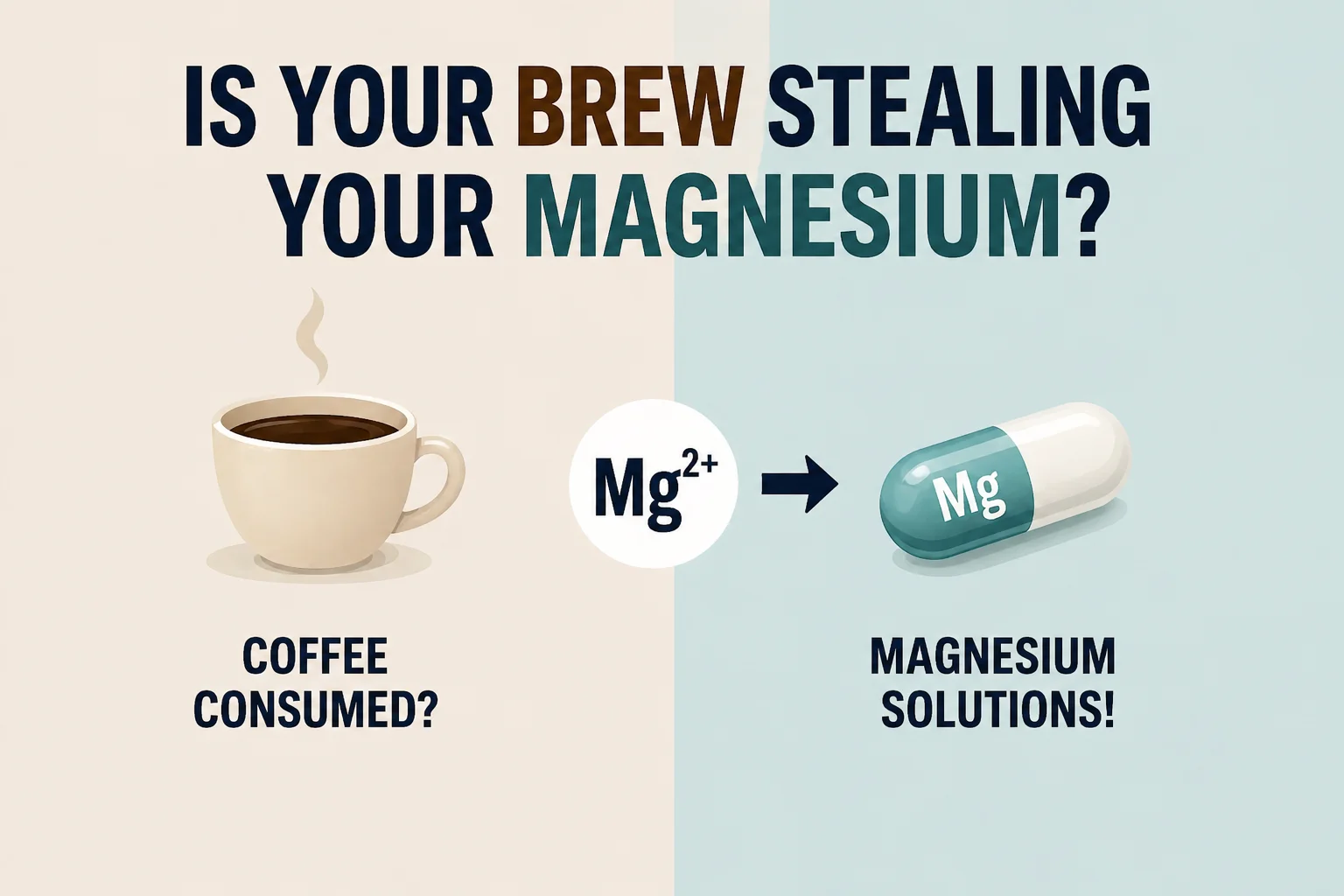
This raises a simple question for all of us: Does coffee decrease magnesium
The answer is not a simple yes or no. Coffee interacts with your body in many ways. It can increase the amount of urine output, influence how your body absorbs nutrients and even affect the stress hormone in your body, like cortisol, all of which play an important role in the magnesium balance.
To fully understand the connection, you need to understand three key angles :
- The diuretic effect of coffee and how it increases the mineral loss
- The cortisol–magnesium feedback loop is tied to stress and caffeine
- How your diet and lifestyle choices either protect or worsen magnesium levels
By the end of this guide, you will know how much caffeine is usually safe for you to consume, what type of people are at risk of mineral depletion and how to enjoy your day without compromising your magnesium levels.
How Coffee Affects Magnesium in the Body
Coffee influences the magnesium levels basically through the fluid balance and absorption, not because it removes magnesium directly in any significant way. The impact depends mainly on how much coffee you are drinking and what your overall diet looks like.
Diuretic Effect and Urine Loss
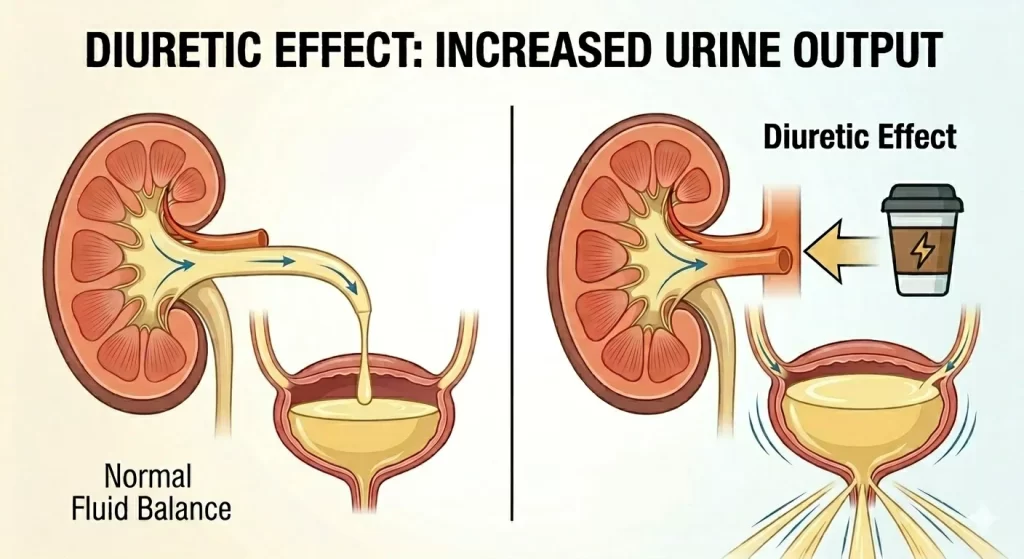
Caffeine is a mild diuretic. This means it increases the amount of urine production in the body, especially in people who are not habitual coffee drinkers or those who consume high amounts of it.
When the amount of urine output increases, your body doesn’t just lose water; along with water, it also loses electrolytes, including magnesium.
Here is how this thing works :
- Caffeine stimulates kidney activity
- This leads to an increased amount of urine production
- Magnesium, along with sodium and potassium, is excreted in greater amounts
However, this effect is usually overstated. In case of regular coffee drinkers, the body automatically adatps and the diuretic effect becomes less distinct. That means your morning cup or two is unlikely to cause any significant amount of amgenisum loss if you are having a healthy diet in general.
The issues usally arises with high levels of caffeine intake and when the hydration is also poor . Drinking 4–5+ cups per day without adequate water can gradually increase the amount of magnesium excretion over time.
Absorption, Thresholds, and At-Risk Groups
Beyond the urine loss, caffeine may also slightly affect how your body absorbs magnesium in the intestines, though this effect is relatively small and mostly relevant in heavy consumption scenarios.
More important is the dose-response relationship:
- 1–2 cups/day: Generally safe for magnesium levels if diet is balanced
- 3–5 cups/day: Potential for increased magnesium loss
- 5+ cups/day: Higher risk, especially with poor diet or stress
It’s also worth noting a common misconception: coffee itself contains a small amount of magnesium, but the quantity is minimal and not enough to offset losses.
Certain groups are more vulnerable to magnesium depletion from coffee:
- People under chronic stress
- Individuals with poor dietary intake
- Those with sleep issues or high caffeine reliance
- Athletes or people with high sweat loss
In these cases, coffee can amplify an already existing imbalance.
The Cortisol–Magnesium Feedback Loop
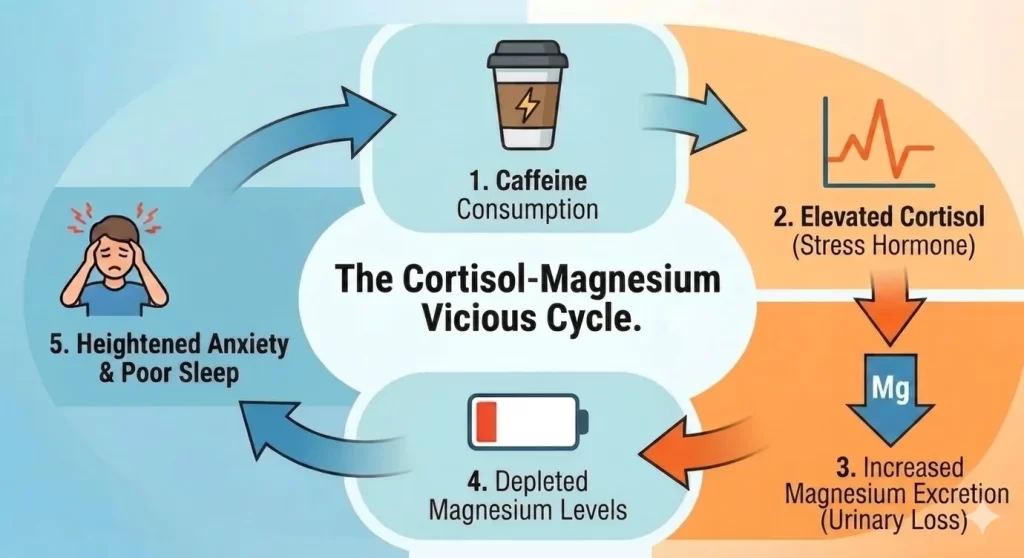
One of the most overlooked aspects of this topic is the cortisol-magnesium feedback loop.
Cortisol is the primary stress hormone in our body. It helps you in staying alert and responsive, but when it is constantly elevated, it can have negative effects. Chronic elevation of cortisol has been associated with sleep disruption, anxiety, and metabolic stress responses.
Here is the loop for you :
- Stress increases cortisol levels
- Elevated cortisol leads to an increased amount of magnesium excretion through urine
- Lower magnesium levels contribute to:
- Anxiety
- Poor sleep
- Muscle tension
- These symptoms increase perceived stress, which further raises cortisol.
This creates a self – reinforcing cycle.
Now, if you add coffee into the mix.
Caffeine stimulates the release of cortisol, especially when consumed :
- Early in the morning (when cortisol is naturally high)
- Late in the day (disrupting sleep and recovery)
This can lead to :
- Increased stress response
- Poor sleep quality
- Greater reliance on caffeine the next day
The result of which? A loop of fatigue→ coffee → cortisol → magnesium loss → more fatigue.
This same caffeine-driven cortisol response is what increases focus and productivity, which we’ve covered in our article on coffee and workplace performance.
Coffee Types, Dose, and Magnesium Impact
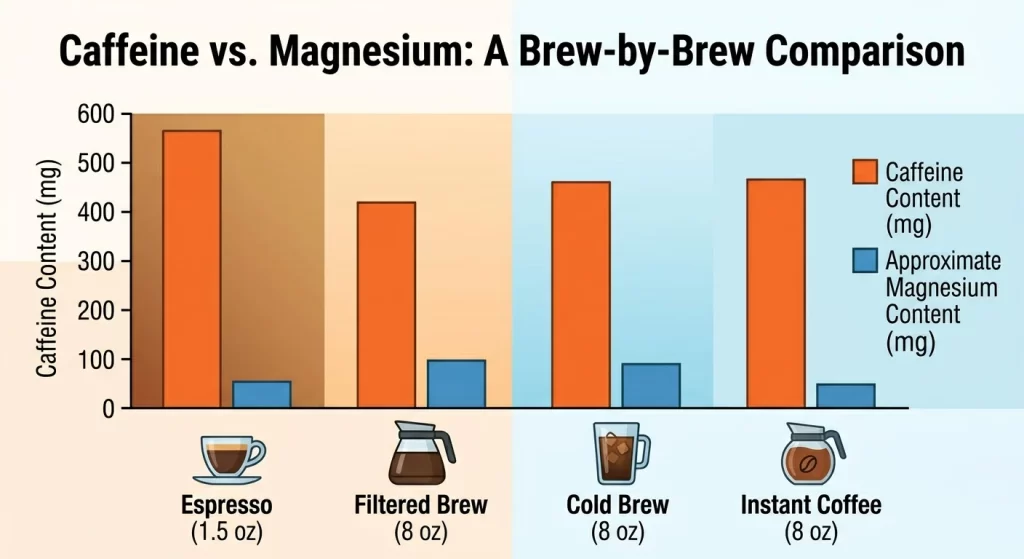
Not all coffee is created equal. Different brewing methods and convenience options can also affect flavour,caffeine intensity ,which can directly influence their impact on magnesium.. Explore the comparison in instant coffee vs pod coffee guide.
Here is a simplified comparison for you :
- Espresso: High caffeine per shot, stronger physiological effect
- Filtered coffee: Moderate caffeine, more diluted per serving
- Instant coffee: Typically lower caffeine, but varies by brand
- Cold brew: Often higher caffeine due to longer extraction time
The key point:
Higher caffeine per serving = stronger diuretic effect and greater cortisol stimulation.
Even though all coffee types contain trace minerals, including magnesium, the amounts are too small to make a meaningful difference.
Another overlooked factor is variability:
- Instant coffee mineral content depends on processing
- Cold brew can vary based on the beans and water used
- The mineral content of the water itself can influence the final cup
So while the magnesium in coffee is negligible, the caffeine load is what matters most for magnesium balance.
Signs You May Be Losing Magnesium from Coffee
Magnesium deficiency is often subtle and difficult to pinpoint because the symptoms are non-specific.
Common signs include:
- Fatigue or low energy
- Muscle cramps or twitching
- Headaches
- Anxiety or irritability
- Heart palpitations
- Poor sleep quality
It’s important to understand that these symptoms do not necessarily mean that you are magnesium deficiency. They can be caused by many factors and should be confirmed through proper medical testing.
However, coffee can exacerbate these symptoms,especially when combined with stress and a poor diet.
Some people switch to alternative caffeine sources for a smoother energy experience. See the full comparison in matcha vs coffee: smoother buzz or quick jolt.
A typical pattern might look like this:
- You feel tired → drink more coffee
- You become jittery but still fatigued
- Sleep worsens → next day requires more caffeine
If you’re consuming 4–5 cups daily, feeling wired yet exhausted, and dealing with sleep or anxiety issues, magnesium depletion could surely be a part of the picture.
How to Drink Coffee Without Losing Magnesium
The goal is not to eliminate coffee but to balance it out intelligently.
1. Prioritise Magnesium-Rich Foods
Include foods like:
- Nuts (almonds, cashews)
- Seeds (pumpkin, sunflower)
- Leafy greens (spinach)
- Whole grains
- Dark chocolate
Try pairing up your coffee with a magnesium-rich snack to offset any kind of potential losses.
2. Stay Properly Hydrated
A simple strategy:
- Match each cup of coffee with a glass of water.
This helps in reducing the diuretic impact and supports electrolyte balance
3. Time Your Coffee Wisely
- Avoid drinking coffee immediately after waking (when cortisol is already high)
- Limit intake in the late afternoon or evening
- Prevent “stress-coffee chains” (stress → coffee → more stress)
4. Support Your Sleep
Better sleep = lower cortisol = better magnesium retention.
Even reducing the coffee by one cup in the evening can greatly improve your sleep quality.
5. Consider Testing Before Supplementing
If you suspect low magnesium levels in your body :
- Get tested rather than self-diagnosing
- Avoid any kind of high-dose supplements without medical advice
Whole foods should always be your first line of defence.
6. Build Magnesium-Friendly Rituals
Simple habits such as :
- Adding nuts alongside your morning coffee
- Having a balanced breakfast instead of coffee alone
These small changes can make a significant difference over time
FAQ
- Does decaf coffee lower magnesium?
Decaf contains much less caffeine, so its diuretic and cortisol effects are minimal. It’s not likely to cause any great impact on magnesium levels.
2. Can coffee cause magnesium deficiency on its own?
Rarely. Coffee alone usually doesn’t cause any sort of deficiency, its contribute when combined with poor diet, stress, or excessive intake.
3. Should I quit coffee if my magnesium is low?
Not necessarily. Reducing intake and improving diet is often enough. Complete elimination is usually not required.
4. How does the cortisol–magnesium loop work with caffeine?
Caffeine increases cortisol, which increases magnesium loss. Low magnesium then worsens the stress and sleep, which raises the cortisol again, creating a cycle.
Final Takeaway
Coffee doesn’t automatically deplete the magnesium in your body, but how much you drink, how stressed you are, and what you eat determine its real impact.
If you are able to manage those three factors well, you can enjoy coffee daily without compromising on your magnesium levels.