Introduction
If you walk into any modern cafe in 2026, you will notice a shift: the counters, which were mostly coffee-dominated once before, are now sharing the spotlight with lively green drinks. At trendy chains such as Blank Street Coffee, nearly 50% of the customers are going for matcha over coffee, a statistic which perfectly captures the wellness-driven beverages revolution going across the United States.
If you have been feeling the familiar cycle, a morning coffee boost followed by a midday crash, you are not alone in this. As the steady energy trends grow, more people are asking the simple question: Is matcha actually better than coffee?
As a coffee-focused creator who has spent many years dialling in espresso shots and testing out different kinds of beans, I didn’t expect to switch sides. But after experimenting with match during the long workdays. I noticed something strange: no jitters, no crash, and sharper focus for longer periods. That personal shift showcases a broader movement; people are not just chasing caffeine anymore: they are chasing how that energy feels.
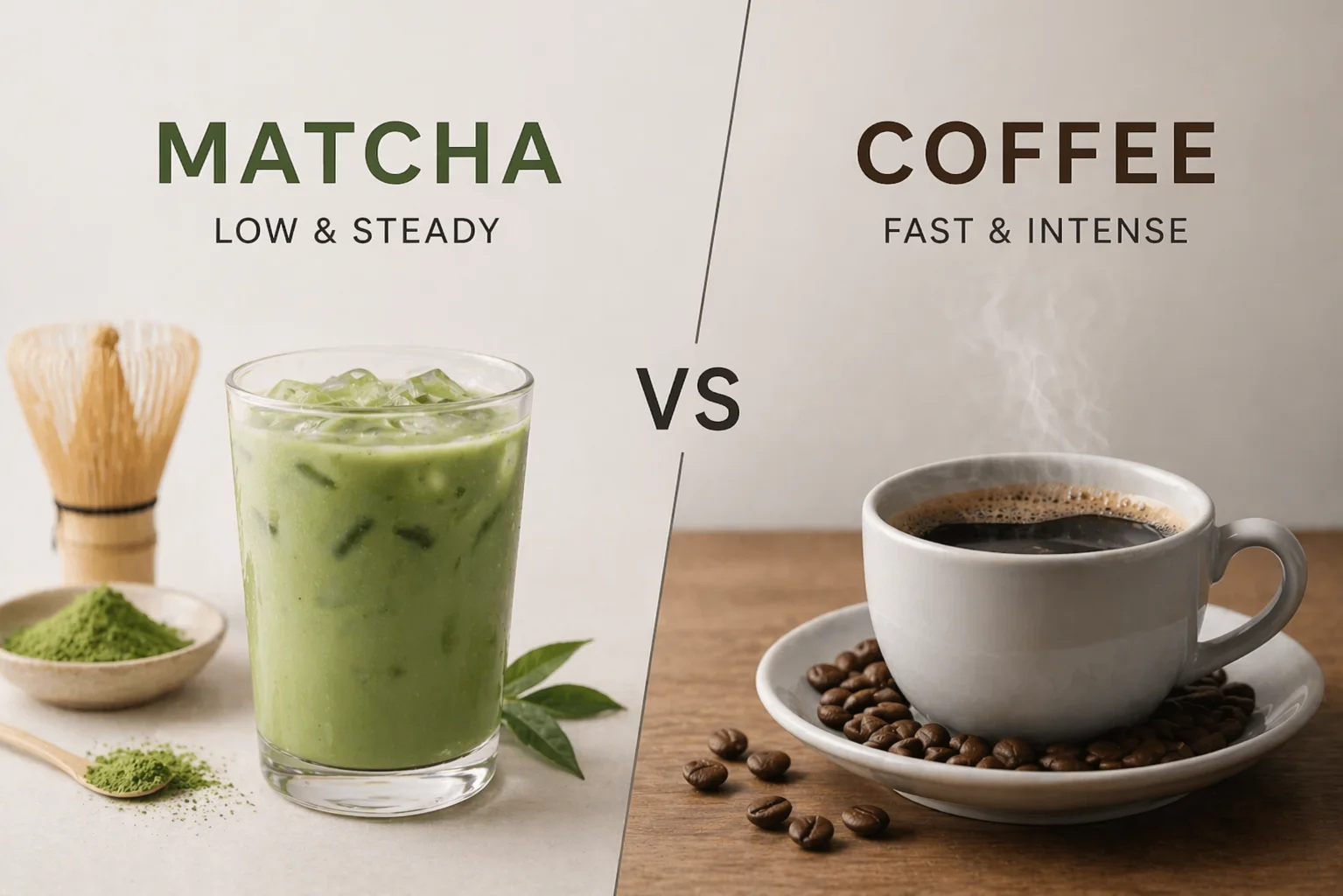
This article breaks down the real difference between matha and coffee, from caffeine science and brain effects to taste, trends, and practical recipes
Caffeine Science Showdown
Understanding Caffeine Beyond Milligrams
Most of the comparisons between matcha and coffee usually stop at caffeine content, but that’s only part of the story. What really matters is how caffeine interacts with your body and brain
| Factor | Matcha | Coffee |
|---|---|---|
| Caffeine (avg) | 30–70 mg | 80–120 mg |
| Half-life | 4–6 hours | 3–5 hours |
| Key Compound | L-theanine | None |
| Energy Profile | Stable, gradual | Fast spike |
Coffee provides a higher dose of caffeine quickly, which explains the immediate alertness you get after having it. Whereas in the case of matcha, it provides a slower release due to its unique composition
The L-Theanine + Caffeine Synergy
The defining advantage of matcha is L-theanine, which is an amino acid which chanes how caffeine behaves in your brain
- Promotes alpha brain waves (associated with calm focus)
- Reduces overstimulation
- Enhances cognitive performance
Instead of overstimulating your nervous system, matcha creates a balanced state of alertness, usually described as calm energy
This kind of synergy is specially beneifcal for :
- Writers and creatives
- Programmers and remote workers
- Students preparing for long study sessions
Cortisol, Stress & Energy Stability
Coffee can notably increase cortisol [ your stress hormone ], especially when consumed on an empty stomach. This contributes to :
- Anxiety
- Energy crashes
- Increased heart rate
- affect magnesium levels[covered in our guide on coffee and magnesium balance.]
Matcha, in contrast, tends to support a more stable hormonal response, which makes it ideal for people sensitive to caffeine.
The Energy Curve Explained
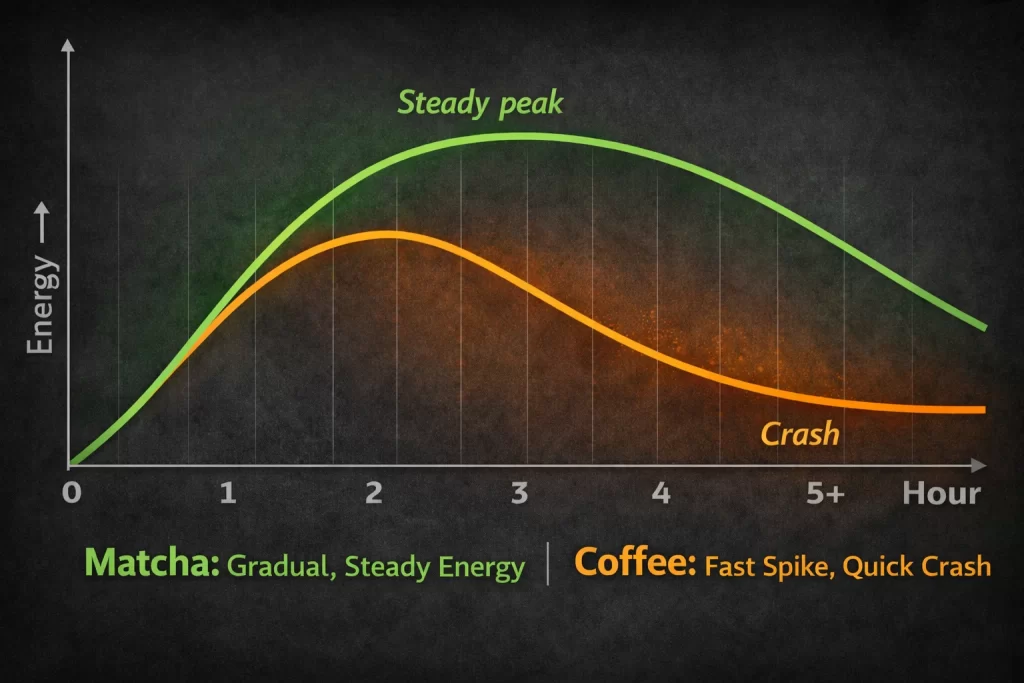
| Hour | Coffee Energy | Matcha Energy |
|---|---|---|
| 0 | Sharp spike | Gradual rise |
| 1-2 | Peak | Building |
| 3-4 | Declining | Steady peak |
| 5+ | Crash | Smooth fade |
Visual shows matcha has a 4-6 hour plateau vs coffee’s 2 hour spike /crash
Why Remote Workers Prefer Matcha
In the US remote work culture, productivity is no longer about quick bursts; it is all about consistent cognitive performance throughout the day.
That’s why many professionals are:
- Replacing their second coffee with matcha
- Switching entirely to matcha for deep work sessions
Key takeaway:
- Coffee = Immediate performance boost
- Matcha = Long-lasting productivity tool
Nutrient & Health Breakdown
Matcha vs Coffee: Functional Health Comparison
| Nutrient/Effect | Matcha | Coffee |
|---|---|---|
| Antioxidants | Extremely high (EGCG-rich) | Moderate |
| Brain Function | Improves attention & memory | Boosts alertness |
| Stress Impact | Calming | Can increase anxiety |
| Oral Health | Supports freshness | Can stain teeth |
| Gut Health | Gentle, low acidity | Can irritate stomach |
Antioxidants and Longevity
Matcha is widely recognised for its high concentration of EGCG (epigallocatechin gallate), a powerful antioxidant which is linked to:
- Reduced inflammation
- Improved metabolism
- Cellular protection
Because matcha involves consuming the entire tea leaf (in powdered form), you will receive significantly more nutrients than in steeped tea or brewed coffee.
Brain Performance & Focus
Matcha is a combination of caffeine and L-theanine, which has been shown to:
- Improve attention span
- Enhance memory retention
- Support multitasking ability
This makes it particularly useful for individuals who are dealing with attention challenges or mentally demanding tasks.
Gut Health & Acidity
Coffee is naturally acidic, which can lead to:
- Acid reflux
- Stomach irritation
- Digestive discomfort
Matcha is much gentler on the digestive system, which makes it a much better choice for those with sensitive stomachs
Heart Health Perspective
Green tea consumption has been associated with:
- Lower LDL cholesterol
- Improved blood vessel function
- Reduced cardiovascular risk
While coffee also has benefits, the overall benefits of matcha give it a slight edge in long-term wellness discussions.
2026 US Trends & Market Shift
Matcha’s Explosive Growth
Matcha has evolved from just being a niche health drink into a mainstream cultural phenomenon.
- Matcha menu items: +30% YoY growth
- Gen Z iced matcha content: +107% increase on social platforms
- Ready-to-drink matcha: +200% growth
Major brands like Starbucks and Costa Coffee have significantly expanded their matcha offerings to meet the rising demand.
The Gen Z Influence
Gen Z consumers are driving this shift through:
- Preference for aesthetic beverages
- More Interest in wellness and mental health
- Social media-driven trends
Iced matcha lattes, in particular, have become a staple in urban US cafés.Blank Street Coffee reports 48% matcha orders vs 52% coffee (2026 Q1 data). Starbucks matcha sales +37% YoY. Yelp shows ‘iced matcha latte’ searches up 210% in NYC/LA.”
A Bifurcated Market
One of the most overlooked aspects of the matcha boom is the split between two distinct markets:
1. Mass-market matcha
- Sweetened drinks
- Flavored syrups
- RTD bottles
2. Premium ceremonial matcha
- Traditional preparation
- Higher quality leaves
- Minimal processing
This dual-market structure explains why matcha appeals to both casual drinkers and serious tea enthusiasts.
Taste, Preparation & US-Friendly Recipes
Flavor Profiles
- Matcha: Earthy, umami, creamy, slightly sweet
- Coffee: Bitter, acidic, fruity, complex
Taste preference usually determines long-term loyalty.
Recipe 1: Peach Iced Matcha Latte
Ingredients:
- 1 tsp matcha
- Peach syrup
- Milk of choice
- Ice
Steps:
- Sift 1 tsp ceremonial matcha, add 2oz 175°F water
- Whisk zig-zag 30 seconds till froth peaks
- Add 1 tbsp peach syrup, stir
- Pour over 6oz almond milk + ice
- Garnish with a peach slice. 68mg caffeine, 4hr energy.”
Recipe 2: Matcha Cold Brew Hybrid
A perfect transition drink for coffee lovers.
Ingredients:
- Cold brew coffee
- ½ tsp matcha
- Oat milk
Benefit: Balanced flavour + extended energy
Recipe 3: NYC-Style Whisked Matcha
Steps:
- Sift matcha powder
- Add hot (not boiling) water
- beat it in a zig-zag motion until frothy
Pro Tips for Better Matcha at Home
- Use 70–80°C water (not boiling)
- Always sift powder to avoid clumps
- Invest in a bamboo whisk for the best texture
- Choose a ceremonial grade for drinking
If you still prefer coffee-based drinks, try:
Who Wins? (Lifestyle Guide)
| Lifestyle | Pick Matcha If… | Pick Coffee If… |
|---|---|---|
| Remote Worker | Need sustained focus | Need a quick boost |
| Gym-Goer | Want steady energy | Need intense pre-workout |
| Student | Prefer calm concentration | Need rapid alertness |
| Creative | Want flow state | Want stimulation |
| Traditionalist | Open to new rituals | Love classic brewing |
FAQs
No, coffee has more caffeine, but matcha provides more stable energy.
Yes, due to the presence of L-theanine.
Yes, especially with low sugar.
Matcha for long sessions, coffee for quick tasks
Less than coffee.
It may support metabolism.
Slower caffeine absorption
Conclusion
The matcha vs coffee debate ultimately comes down to lifestyle and priorities.
Coffee remains unmatched for its bold flavour, cultural significance and giving an instant energy boost. But matcha is clearly emerging as the preferred choice for the sustained focus, reduced amount of stress and long-term wellness in 2026.
If your main goal is to avoid any crashes, improve your concentration and go with the trendy modern wellness habits, matcha can be an upgrade for you.
The best way to decide? Try both of them intentionally. Notice how your body responds to it throughout the day.
My personal preference will be coffee only, because I not only love the taste of coffee but the art of it coming out from my espresso machine, and the soothing smell of it gets me going from the second I smell it. On the other hand, when I tried matcha, it tasted quite grassy to me. Everyone has their own choices, but for me, it will always be coffee.
My Personal Verdict: Why I Still Choose Coffee
For me, it will always be coffee. It’s not just about the caffeine; it’s the entire experience. From the moment I brew it, watching the espresso flow from my machine feels like an art form. The rich aroma alone is enough to wake me up even before the first sip.
I’ve tried matcha, and while I understand why so many people love it, it just didn’t click with me. The taste felt a bit too grassy for my preference, and it lacked the depth and warmth I associate with coffee.
That said, I can see why matcha is gaining popularity, especially for those looking for smoother energy and fewer jitters. But when it comes to what I genuinely enjoy and look forward to every day, coffee wins easily for me
Everyone has their own choices, and this one is mine: coffee for the taste, the ritual, and the feeling it brings.