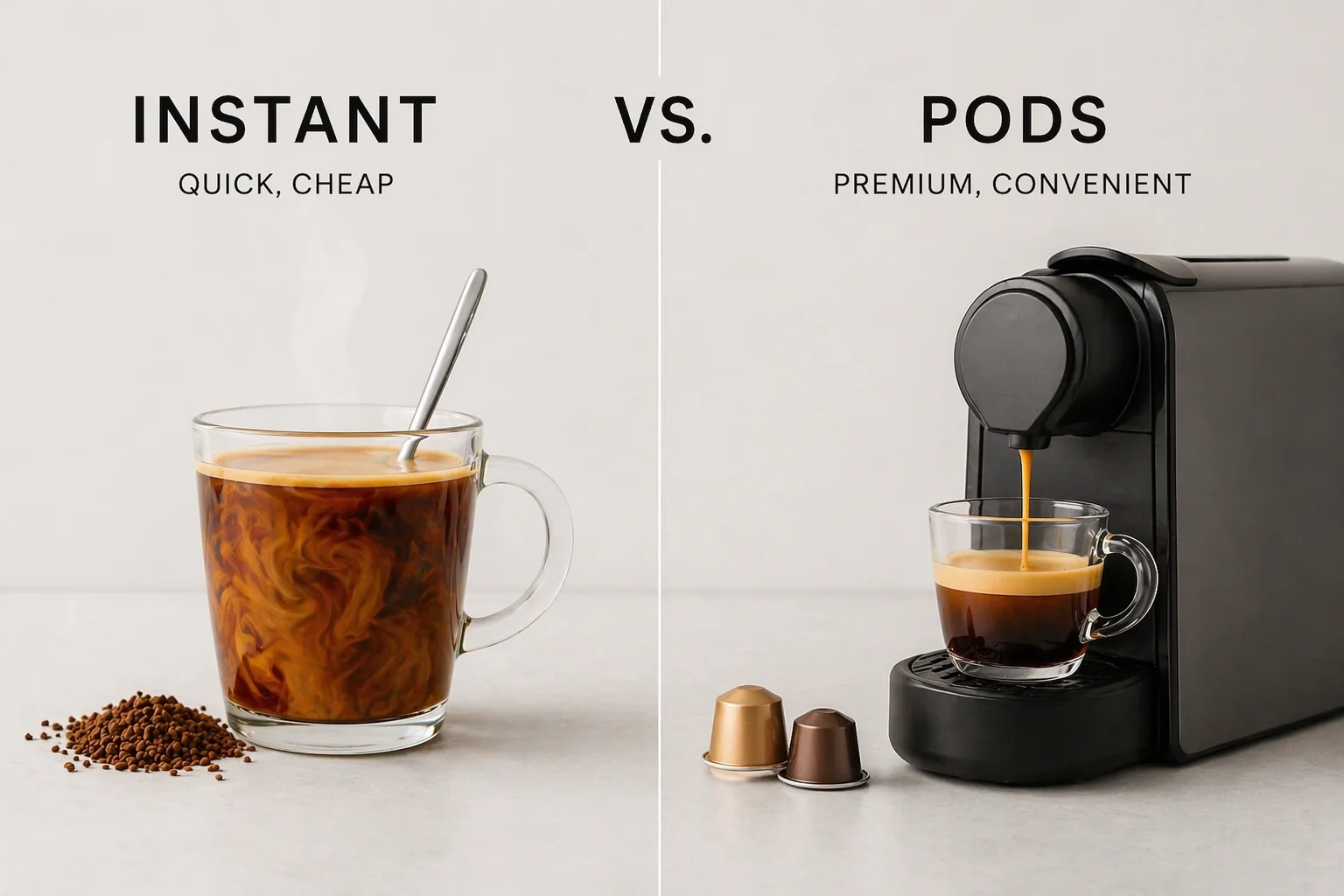
Coffee has evolved from just being a simple ritual into being a personalised experience. Today, two of the most popular quick brew options, which are instant coffee and pod coffee, provide the convenience without the wait of traditional brewing methods. But while both deliver fast caffeine, they differ mainly in taste, cost, convenience and environmental impact.
If you are deciding between the two, this in-depth guide will break down everything, from flavour profiles to long-term costs, so you can choose what fits your lifestyle the best.
What is Instant coffee?
Instant coffee is made by brewing regular coffee and then removing the water through freeze drying or spray drying, leaving behind the double granules or powder. When you add hot water, it dissolves quickly, hence the name.
Key Characteristics:
- Ready in seconds, you just need to add hot water
- No equipment needed (optional kettle)
- Extremely affordable per cup
- Long shelf life and easy storage
Pros:
- Ultra-convenient: Perfect for travel, office desks, or quick fixes
- Budget-friendly: Costs as little as $0.10 per cup
- Lightweight & portable: Ideal for camping or minimal setups
Cons:
- Weaker flavour: Lacks the depth and aroma of freshly brewed coffee
- Slight bitterness: Due to high-heat processing
- Limited variety: Fewer speciality blends compared to pods
What Are Coffee Pods?
Coffee pods are pre-measured portions of ground coffee which are sealed in plastic or aluminium containers. They are designed for use with single-serve machines, which brew coffee by forcing hot water through the pod under pressure.
Key Characteristics:
- Requires a pod machine
- Brewed in under a minute
- Designed for consistent, café-style results
- Wide range of flavours and strengths
Pros:
- Superior taste: Richer flavour with crema and aroma
- Consistency: Same quality every time
- Wide selection: Hundreds of blends and origins
Cons:
- Higher cost: $0.50–$1.00 per cup
- Machine dependency: Requires upfront investment
- Environmental concerns: Pod waste can add up
Convenience and Speed
If speed is your topmost priority, instant coffee is unbeatable. You don’t need electricity [beyond heating water ], and there is zero setup.
Pod coffee, however, provides you with automated convenience. Insert a pod, press a button, and your coffee is ready, no measuring, no guesswork. While slightly slower than instant, it is still far quicker than drip or French press brewing.
Verdict:
- Instant coffee = best for minimal effort
- Pod coffee = best for effortless consistency
Taste and Flavour Profile
This is where pod coffee clearly stands out.
Instant Coffee:
- Usually described as flat or muted
- Loses aromatic oils during processing
- Some premium options are improving, but are still limited
Pod Coffee:
- Extracted under pressure, similar to espresso
- Produces crema, body, and layered flavours
- Provides you with diverse profiles: fruity, nutty, bold, or smooth
In blind taste tests, pod coffee typically wins due to its freshness and complexity.
Verdict: If flavour matters for you, pod coffee is the clear winner.
The richer extraction in pod coffee is similar to espresso-based drinks, where balance plays an important role. If you want to understand how milk and coffee ratios affect flavour, read our detailed guide on the latte milk-to-coffee ratio.
Cost Comparison: Short-Term vs Long-Term
Instant Coffee:
- A $6 jar can make 100+ cups
- Average cost: $0.10–$0.25 per cup
Pod Coffee:
- A $15 pack of 24 pods = ~$0.60 per cup
- Plus machine cost: $100–$300 upfront
Long-Term Example:
If you drink 3 cups daily:
- Instant: ~$0.45/day → ~$165/year
- Pods: ~$1.80/day → ~$657/year
That’s a 4x difference annually.
Verdict: Instant coffee is far more economical, especially for heavy drinkers.
Health and Nutrition
Both options are surprisingly similar nutritionally.
Similarities:
- Caffeine: 60–100 mg per cup
- Calories: Nearly zero (without additives)
- Antioxidants: Present in both
Differences:
- Pods may retain slightly more antioxidants due to gentler processing
- Instant coffee can contain small amounts of acrylamide, a byproduct of high-heat drying
However, these differences are minor for most people.
Verdict: Both are safe and comparable; focus on what you want to add (sugar, cream).
Environmental Impact
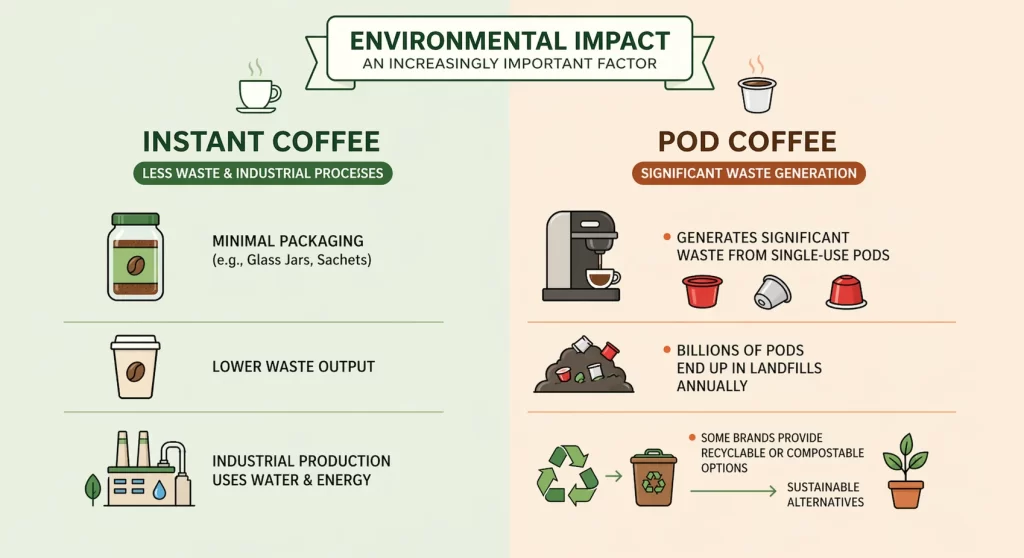
This is an increasingly important factor.
Instant Coffee:
- Minimal packaging (glass jars or sachets)
- Lower waste output
- Industrial production uses water and energy
Pod Coffee:
- Generates significant waste from single-use pods
- Billions of pods end up in landfills annually
- Some brands provide you with recyclable or compostable options
Sustainable Tips:
- Choose recyclable aluminium pods
- Use brand recycling programs
- Consider reusable pod systems
Verdict: Instant coffee is generally more eco-friendly, but sustainable pod options are improving.
Pros and Cons Summary
Instant Coffee
Pros:
- Cheapest option
- Fastest preparation
- Highly portable
- No equipment needed
Cons:
- Inferior taste
- Limited variety
- Slightly processed flavor
Pod Coffee
Pros:
- Better taste and aroma
- Wide range of options
- Consistent results
- Café-style experience at home
Cons:
- Expensive over time
- Requires machine
- Environmental concerns
Who Should Choose Instant Coffee vs Pod Coffee?
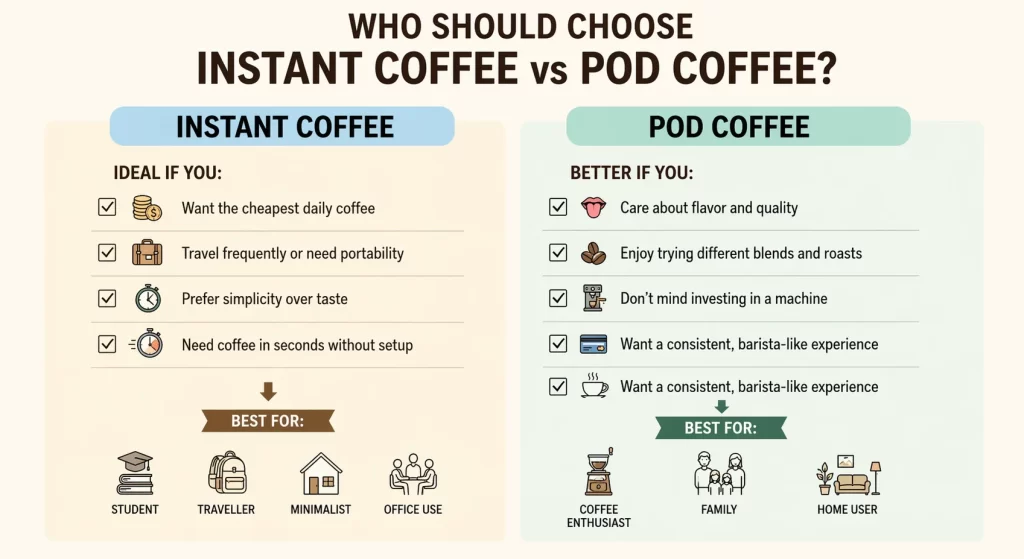
Instant coffee is ideal if you:
- If you want to have the cheapest daily coffee
- Travel frequently or need portability
- Prefer simplicity over taste
- Need coffee in seconds without setup
Best for: Students, travellers, minimalists, office use
Pod coffee is better if you:
- Care about flavor and quality
- Enjoy trying different blends and roasts
- Don’t mind investing in a machine
- Want a consistent, barista-like experience
Best for: Coffee enthusiasts, families, home users
Frequently Asked Questions
- Is pod coffee healthier than instant coffee?
Not significantly. Both have similar caffeine and antioxidant levels. Pods may retain slightly more nutrients, but the difference is quite minimal.
- Can instant coffee taste as good as pod coffee?
Rarely. Premium instant options are improving day by day b, but they still lack the richness and crema of pod coffee.
- Are coffee pods worth the cost?
Yes, if you value taste, convenience, and consistency. Otherwise, instant coffee provides you with much better savings.
- Are there eco-friendly pod options?
Yes. Look for recyclable aluminium pods or compostable alternatives. Some brands also provide you with recycling programs.
- Do instant and pod coffee have the same caffeine?
Generally, yes. Both range between 60–100 mg per cup, depending on the strength.
Final Verdict
Choosing between instant coffee and pod coffee at the end comes down to your priority:
- You can go for instant coffee if you want quick, affordability and simplicity
- You can choose pod coffee if you care more about taste, variety and having a premium experience.
For many people, the solution is not one or the other, but it’s usually both. You can use instant coffee for quick fixes, travel, and pods when you actually want to enjoy a cup
Thats way you can get the best of both worlds.