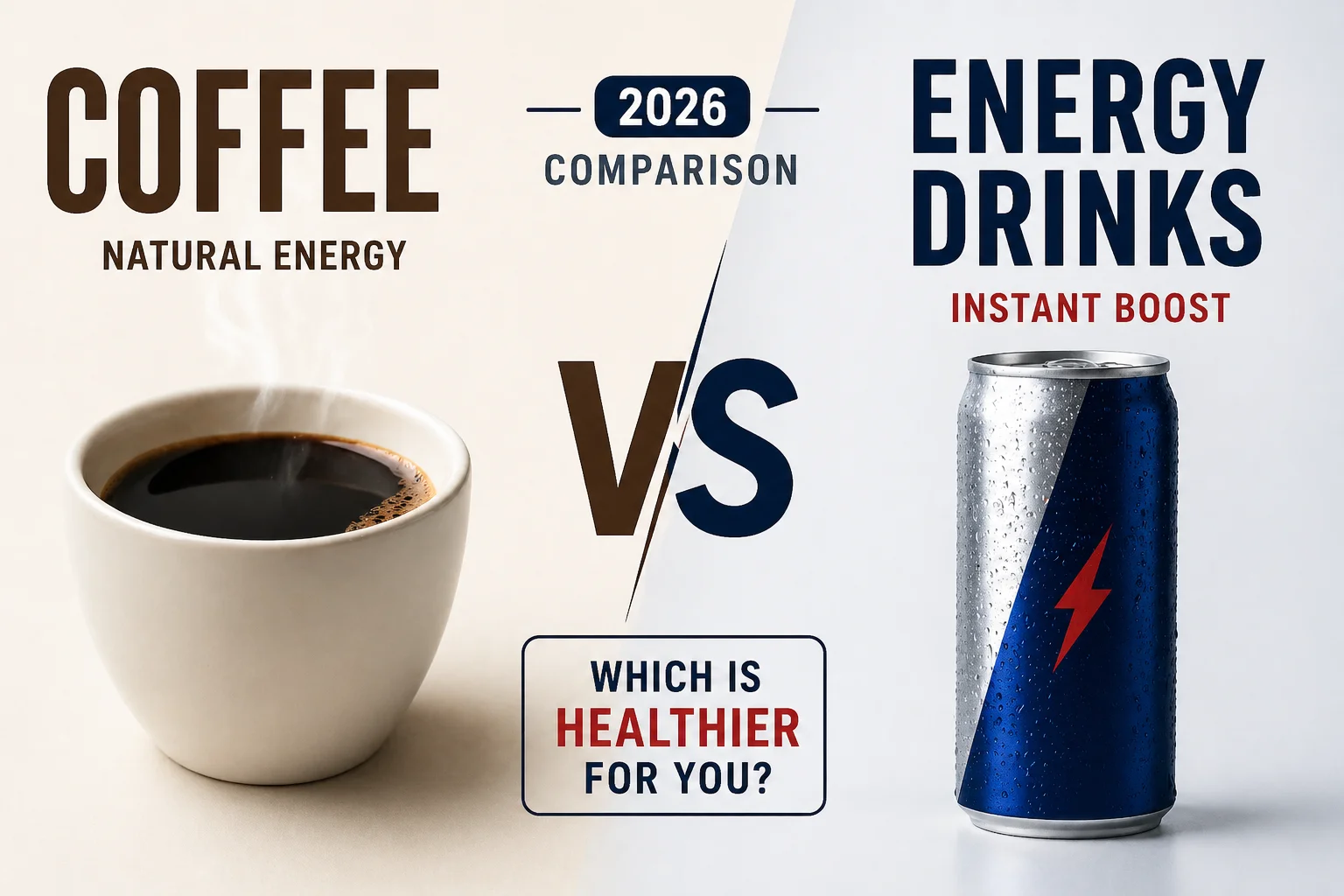
The debate around coffee vs energy drinks has grown in 2026 as both categories have continued to grow rapidly. Energy drinks have nearly crossed the $2 billion+ in global sales, mainly driven by the Gen Z consumers who prefer to have convenient, ready-to-drink cans. At the same time, coffee, especially the cold brew and functional RTDs, has evolved into a daily routine for professional and health-conscious users.
Both options promise one thing, which is instant energy. But the real question is which one is better for your health, performance, and long-term usage.
While energy drinks provide you with a quick boost, coffee usually comes out ahead due to its natural composition and proven health benefits; however, the best choice for you depends on your lifestyle, tolerance and goals. Let’s break it down in detail for you.
Caffeine Content Breakdown (Brand-Level Comparison)
How Much Caffeine Do You Actually Get?
Caffeine is the primary stimulant in both coffee and energy drinks, but the quantity and delivery differ significantly.
- Coffee: ~80–100 mg per 8 oz
- Energy drinks: ~70–300 mg per serving
| Drink Type | Example | Caffeine | Notes |
| Black Coffee | Brewed coffee | 95 mg | Natural caffeine |
| Espresso | Single shot | 63 mg | Fast absorption |
| Energy Drink | Red Bull Energy Drink | 80 mg | Contains taurine |
| Energy Drink | Monster Energy Original | 160 mg | High sugar content |
| Sugar-Free Drink | Celsius Energy Drink | 200 mg | Marketed for workouts |
Absorption and Energy curve
Coffee provides you with caffeine more gradually, leading to sustained energy without any sharp crash. On the other hand, energy drinks, especially the sugary ones, usually cause a rapid spike, which is followed by fatigue, due to sugar and combinations of stimulants.
Nutrition & Ingredients Comparison
Coffee: A Natural Powerhouse
Black coffee is one of the simplest beverages you can consume:
- Calories: 2–5
- Sugar: 0g
- Rich in antioxidants (polyphenols)
- No artificial additives
Coffee is also linked to reduced inflammation and improved metabolic health when consumed in moderation.
The natural composition of the coffee is one reason it’s usually compared with alternatives like matcha, which provides you with a smoother energy release. Check out matcha vs coffee: smoother buzz or quick jolt.
Energy Drinks: Loaded with Additives
Energy drinks are more complex:
- Calories: 110–250
- Sugar: 25–54g (in many variants)
- Ingredients: taurine, guarana, B-vitamins, artificial flavours
While some brands provide you with sugar-free versions, they still rely heavily on synthetic stimulants.
| Aspect | Coffee | Energy Drinks |
| Calories | Very low | High |
| Sugar | None | High (unless sugar-free) |
| Antioxidants | High | Minimal |
| Additives | None | Multiple synthetic compounds |
Energy & Performance Effects
Coffee for Sustained Performance
Research shows coffee can improve endurance performance by 10–12%, which makes it ideal for workouts, studying, or long workdays. It increases :
- Focus
- Reaction time
- Fat oxidation
Energy Drinks for Instant Boost
Energy drinks work faster due to combined stimulants like caffeine + taurine. This makes them useful for:
- Late-night gaming
- Short bursts of activity
- High-intensity workouts
However, this usually comes with jitters, increased heart rate, and energy crashes.
Scientific Insight
Coffee stimulates a more stable dopamine release, while energy drinks trigger the sympathetic nervous system, leading to a “fight-or-flight” response rather than steady alertness.
Health Benefits & Risks (Backed by Studies)
Heart Health
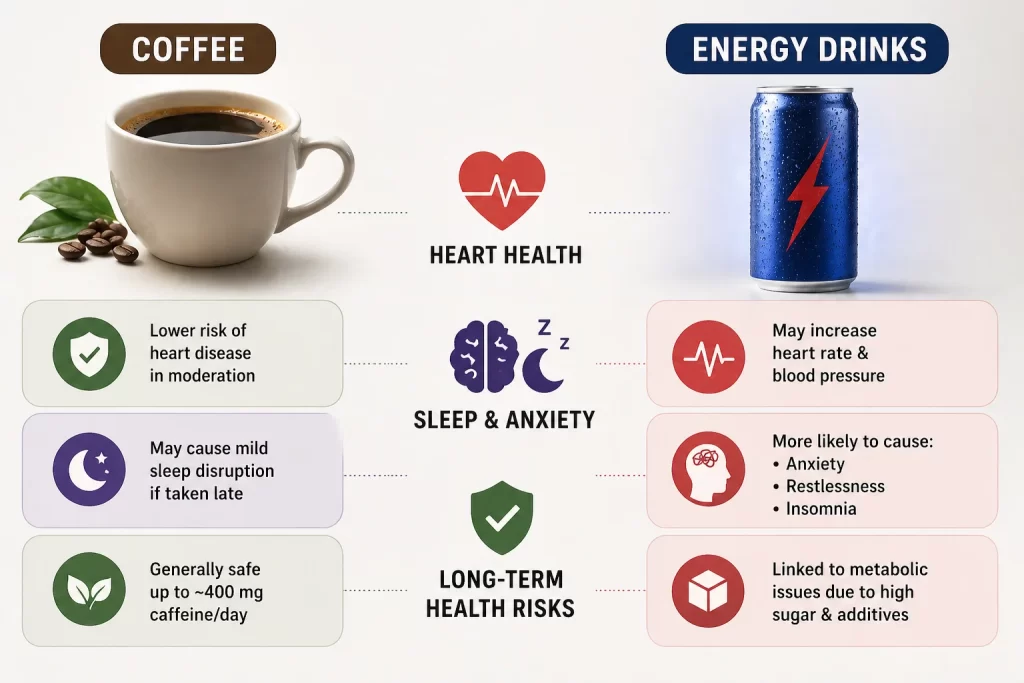
- Coffee: Associated with a lower risk of heart disease when consumed in moderation
- Energy drinks: Can increase heart rate and blood pressure, especially in excess
Sleep & Anxiety
Both beverages can disrupt sleep, but energy drinks are more likely to cause:
- Anxiety
- Restlessness
- Insomnia
Long-Term Health Risks
- Coffee: Generally safe up to ~400 mg caffeine/day
- Energy drinks: Linked to metabolic issues due to high sugar and additives
Who Should Be Careful?
| User Type | Recommendation |
| Athletes | Energy drinks occasionally (hydration + electrolytes) |
| Office workers | Coffee is ideal for daily use |
| Pregnant women | Limit coffee (<200 mg/day) |
| Teenagers | Avoid both |
| Gamers | Opt for sugar-free energy drinks |
2026 Market Trends & Industry Insights
Energy Drink Boom
The energy drink category continues to grow by nearly 20% annually, with brands such as Monster Energy leading the global market. Their success is driven by:
- Bold branding
- Youth-focused marketing
- Convenience
Coffee’s Evolution
Coffee isn’t standing still. Trends include:
- Ready-to-drink (RTD) coffee
- Protein-infused coffee
- Functional blends (adaptogens, collagen)
Price Comparison
| Product | Average Cost |
| Homemade coffee | ₹20–₹50 |
| Café coffee | ₹150–₹400 |
| Energy drink | ₹125–₹250 |
Coffee remains the more economical daily option, especially when brewed at home.
Sustainability Factor
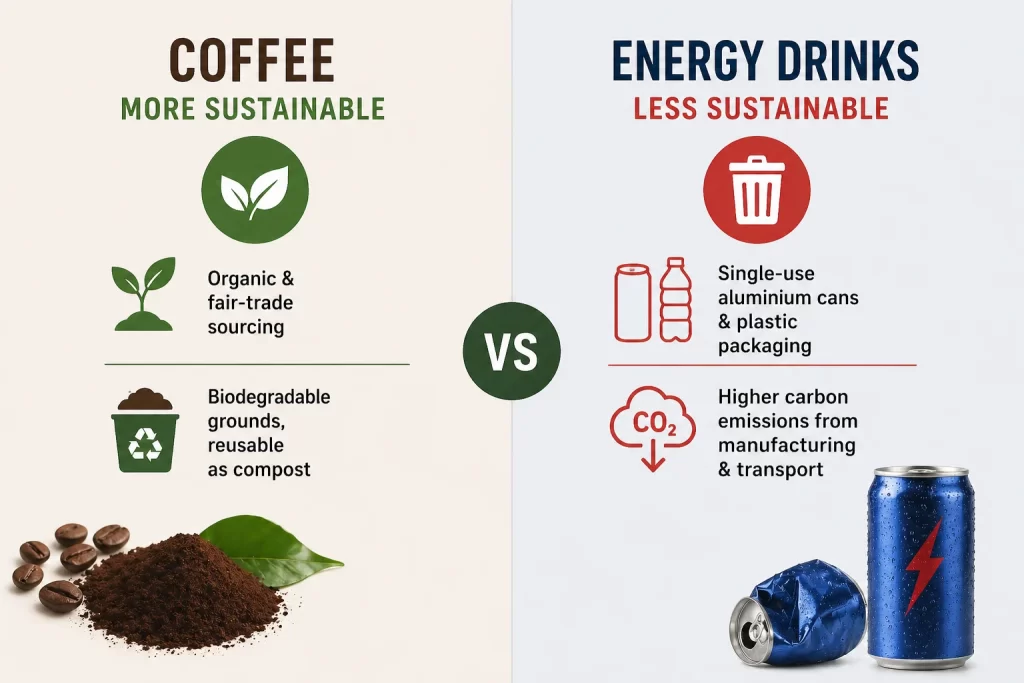
Sustainability is an important factor in the coffee vs energy drinks comparison. Coffee is usually more eco-friendly, especially when sourced through organic and fair-trade farming practices. It produces less waste since coffee grounds are biodegradable and can be reused as compost.
Energy drinks, however, rely heavily on single-use aluminium cans and plastic packaging, which require high energy to produce and are not always recycled properly. Their growing demand also increases carbon emissions from manufacturing and transport.
Key Insight: For users searching for “eco-friendly caffeine options,” coffee is usually the more sustainable choice, especially when it is brewed at home with minimal packaging
Who Should Choose What?
Best Choice by Lifestyle
- Working professionals: Coffee for sustained focus
- Gym-goers: Energy drinks (pre-workout boost)
- Students: Coffee for concentration
- Gamers: Sugar-free energy drinks for quick alertness
- Health-conscious individuals: Coffee is the better long-term choice
Final Verdict
When comparing coffee vs energy drinks, coffee clearly wins for most people. It provides you with :
- Natural ingredients
- Proven health benefits
- Stable energy
Energy Drinks still have a place, but they should mainly be used for short-term performance needs, not for daily consumption.
The key is moderation. You should stay within the recommended 400mg caffeine limit per day and choose the option which goes well with your health and lifestyle goals.
FAQs
1. Which is better for weight loss: coffee or energy drinks?
Coffee is better for weight loss because it has zero calories and no sugar, while many energy drinks contain added sugars that can lead to weight gain.
2. Can energy drinks replace coffee?
Not for daily use. They are better suited for occasional consumption.
3. Are sugar-free energy drinks safe?
They are a better option than sugary ones, but still contain high stimulant levels and artificial flavours
4. Which gives longer-lasting energy?
Coffee provides you with a more stable and sustained energy as compared to energy drinks.
5. Do energy drinks damage your teeth more than coffee?
Yes, energy drinks are generally worse for dental health due to their high sugar and acidity, which can erode the enamel faster than coffee.