
Introduction
Coffee increases productivity in ways most people don’t fully understand; it’s not just about staying awake. Studies have shown that caffeine, the active compound in coffee, directly increases focus, memory, learning speed, and even social bonding at work. In fact, workers who take regular coffee breaks report up to 23% higher productivity compared to those who skip them. Whether you’re powering through a Monday morning meeting or pushing through a midday slump, the science is clear: coffee can make you meaningfully better at your job. In this article, we break down 6 proven ways coffee increases productivity and how to use it strategically for the best results.
Coffee in the Workplace by the Numbers
Coffee is quite deeply connected to workplace culture and employee productivity. Recent workplace studies and industry reports have shown just how important caffeine has become in modern offices:
- Around 64% of American adults drink coffee daily, with many consuming it specifically to stay productive during work hours.
- Nearly 43% of workers choose coffee over other caffeinated beverages because they believe it improves concentration and performance.
- Studies show that 65% of employees expect high-quality coffee at work, viewing it as part of a positive workplace environment.
- About 80% of employees say coffee breaks are important for mental well-being and team bonding.
- The U.S. office coffee service market continues to grow rapidly and is projected to expand at a 10.2% CAGR, reflecting increasing demand for workplace coffee solutions.
These statistics showcase that coffee is not just a beverage anymore; it has become part of the workplace productivity culture itself.
How Coffee Increases Productivity: 6 Science-Backed Ways
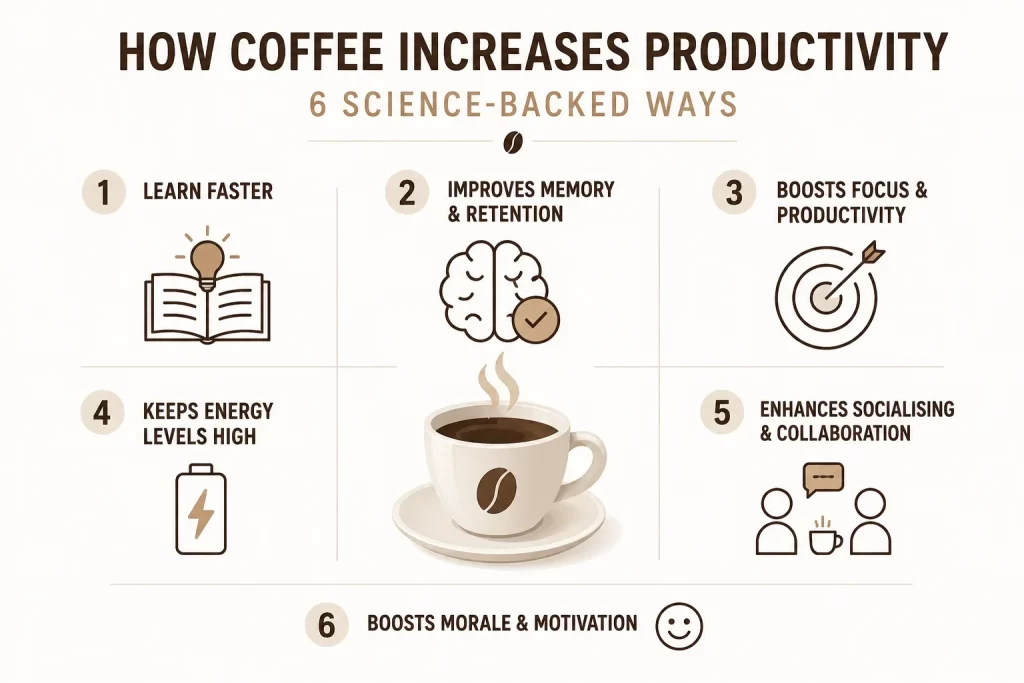
It’s no secret that the caffeine in coffee is what people want, although some enjoy the acquired taste. There’s a good reason why caffeine is widely consumed: it does its job well. But how does it work? Here are 6 ways in which coffee increases productivity:
1. Coffee Increases Productivity by Helping You Learn Faster
Everyone learns in different ways and from different information sources, including books, magazines, tutorials, audio and other forms of media. Continuous learning requires focus and attention, which, like willpower, can wane throughout the day.
According to one study, consuming around 200 milligrams of caffeine can speed up your ability to identify sentences and words. You may just need a few cups of coffee to fully concentrate on the material you are studying and apply it to your business or work.
2. How Coffee Improves Memory and Information Retention
Caffeine can help people absorb and retain new information more quickly, in addition to keeping them alert.
A study published in Nature Neuroscience suggested that caffeine can increase certain neural pathways associated with learning and recall, which can help people in processing information more efficiently.
Employees may feel more alert when drinking coffee, which can allow them to tackle tasks more quickly and remember assignments better throughout the workday. Coffee can therefore provide a useful advantage when learning new workplace systems, training materials or complex tasks
3. Coffee Boosts Focus and Keeps You Productive at Work
Caffeine can help people in the workplace stay alert and focus better, which can increase productivity. It can also help get out of the midday slump and make one feel better. How does coffee achieve this? Adenosine, a chemical found in the brain, is responsible for sleepiness. When adenosine builds up in the brain, you feel tired. Caffeine works primarily by blocking adenosine receptors, which helps reduce feelings of tiredness and increases alertness.
Coffee counteracts the stimulating effects of caffeine and makes people feel more alert. Because coffee increases energy and stimulates brain activity, it can help people in the workplace stay awake. Coffee can’t wake people up, but it can make them feel less sleepy. People are more productive when they are happier.
Some people prefer smoother caffeine sources with fewer jitters and crashes. See the full comparison in matcha vs coffee: smoother buzz or quick jolt.
4. How Coffee Keeps Your Energy Levels High All Day
Say, a two-hour meeting is the first item on a Monday morning. You’ve barely gotten out of bed, and two hours of “death by PowerPoint” isn’t going to cut it right now. How do you stay alert?
Most of us are aware that caffeine can stimulate the brain and improve our abilities; however, coffee can also enhance our cognitive and physical motor senses. Coffee can improve your ability to react quickly and keep you going for longer, whether you’re crunching numbers on a keyboard or doing manual work in the field. Caffeinated coffee helps people stay awake and strengthens their central nervous system, which keeps them productive throughout the day.
5. Can Coffee Help Employees Socialise and Collaborate Better?
Drinking coffee at work can help employees overcome social barriers. It can be a useful icebreaker, help new hires get to know their co-workers and create common ground in the workplace.
According to statistics, the typical worker consumes approximately four cups of coffee or tea. Thanks to this, employees can communicate with each other while working. It is possible to quickly catch up with co-workers during a coffee break, especially if they’ve spent the entire day confined to their desk or cubicle.
6. How Coffee Boosts Morale and Workplace Motivation
Let’s say you had a bad start to the day and forgot your coffee at home. Knowing you can have a great cup of coffee at work can make your day. Drinking coffee has become a daily ritual in workplaces. Employees can be more excited about their day at work if they have access to coffee. Adenosine signals to the brain that you are tired and is triggered by this chemical; caffeine in coffee helps protect the brain from this. You can prepare for a productive day with a cup of good coffee. Did you wake up a little tired? Drink your coffee, and you’re good to go.
Best Time to Drink Coffee for Maximum Productivity
Most of us reach out for our cup of coffee minutes after our alarms ring, but actually, this is the worst time to do so.
Here’s why: your body naturally produces cortisol, a hormone that keeps you alert and focused, in peaks throughout the day. The first peak happens between 8:00 AM and 9:00 AM. Drinking coffee during this window usually means that the caffeine is competing with a hormone which is already doing its job. The result? Reduced effectiveness and faster caffeine tolerance over time.
The Best Time to Drink Coffee for Maximum Productivity
The sweet spot for coffee and productivity is between 9:30 AM and 11:30 AM.
To make the most of this timing, it’s best to delay your first cup of coffee until after the natural cortisol levels of your body begin to drop. This is when coffee increases productivity more effectively, as caffeine can provide a stronger boost in alertness and focus without interference from the internal rhythm of the body.
For people with different schedules, such as early risers or night shift workers, the same principle applies: you should have coffee when your energy naturally dips rather than when it is already high. By aligning caffeine intake with the biological clock of your body, you can improve performance, reduce dependency, and maintain consistent energy levels throughout the day.
Timing your coffee properly also helps avoid cortisol spikes and mineral imbalance, which is explained in detail in our article on coffee and magnesium levels.
How to Use Coffee Strategically for Productivity
Coffee works best when consumed intentionally rather than excessively. Here are some practical ways for you to maximise productivity benefits while reducing side effects:
- Stick to moderate portions: An average 8oz cup of coffee contains around 80–100mg of caffeine.
- Choose smaller frequent cups: Drinking smaller amounts throughout the day may help maintain stable energy levels better than one oversized coffee.
- Stay hydrated: Coffee has mild diuretic effects, so drinking water alongside coffee can help prevent dehydration and headaches.
- Avoid caffeine too late: Try not to consume coffee after 3 PM to protect sleep quality.
- Pair coffee with food: Drinking coffee on an empty stomach may increase the chance of jitters or acid discomfort for some people.
- Consider alternatives: Decaf coffee, green tea or herbal teas can provide a lighter energy boost with less caffeine.
- Use coffee during energy dips: Instead of drinking coffee immediately after waking up, consume it when your natural energy begins to decline.
Using coffee strategically can help maintain focus, energy and productivity throughout the day without increasing dependency.
Coffee vs Other Caffeinated Drinks: Caffeine Comparison
| Beverage | Average Serving Size | Approximate Caffeine |
|---|---|---|
| Brewed Coffee | 8oz | 95–100mg |
| Espresso | 1oz | 63mg |
| Black Tea | 8oz | 40–70mg |
| Green Tea | 8oz | 25–45mg |
| Energy Drink | 8oz | 70–120mg |
| Decaf Coffee | 8oz | 2–15mg |
Potential Downsides of Coffee for Productivity
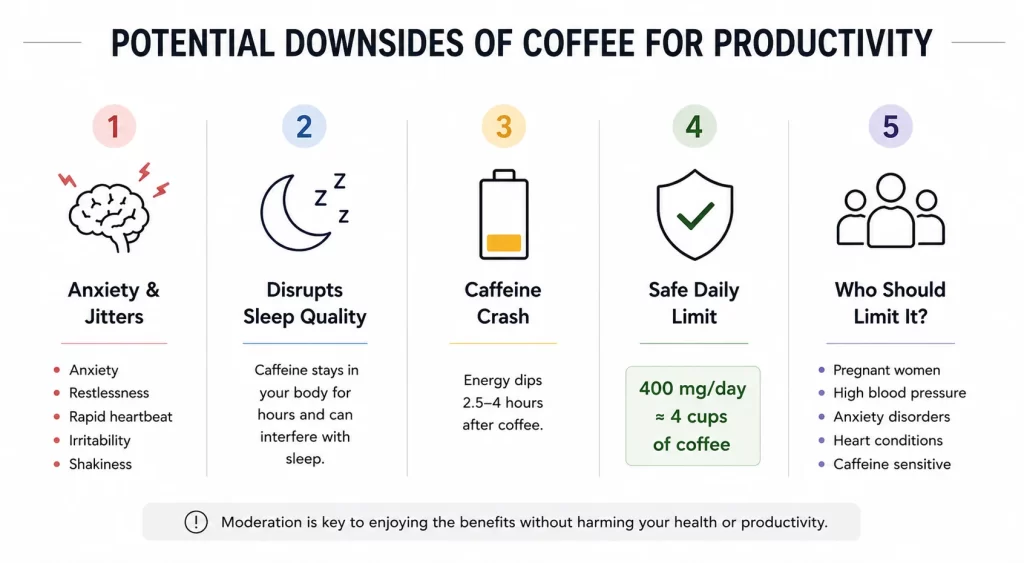
While coffee increases productivity for many people, excessive amounts of caffeine intake can have the opposite effect and negatively impact both health and work performance.
1. Too Much Coffee Can Cause Anxiety and Jitters
High caffeine consumption may overstimulate the nervous system, leading to:
- Anxiety
- Restlessness
- Rapid heartbeat
- Irritability
- Shakiness
People who already struggle with anxiety disorders may be especially sensitive to caffeine.
2. Coffee Can Disrupt Sleep Quality
Caffeine stays in the body for several hours. Drinking coffee late in the afternoon or evening can interfere with sleep quality, making people feel more tired and less productive the next day.
Experts generally recommend that you should avoid caffeine after 3 PM, especially for people who are sensitive to sleep disruption.
3. The Caffeine Crash Is Real
Coffee can temporarily boost alertness, but energy levels may decline once the effect of caffeine wears off. Many people experience a “caffeine crash” roughly 2.5 to 4 hours after consumption, which may lead to fatigue, reduced concentration and irritability.
4. Safe Daily Caffeine Limit
According to the U.S. Food and Drug Administration (FDA), most healthy adults should limit caffeine intake to around:
400 mg/day≈4 cups of coffee
Consuming more than this regularly may increase the risk of side effects and caffeine dependence.
5. Who Should Limit Coffee Intake?
Certain individuals should consume caffeine carefully or consult a healthcare professional before increasing coffee intake, including:
- Pregnant women
- People with high blood pressure
- Individuals with anxiety disorders
- People with heart conditions
- Individuals sensitive to caffeine
Moderation is the key to enjoying coffee’s productivity benefits without harming overall well-being.
Conclusion
It is crucial to be familiar with both the advantages and disadvantages of coffee. Limited consumption, with greater awareness of your sleep habits and stress levels, can be helpful. At the same time, being conscious that overusing and exploiting can lead to an increase in health problems. Mostly, caffeine misuse is not worth your anxiety, so better set your boundaries and stay safe.
FAQS
1. Does coffee help with multitasking?
Coffee may help improve reaction time, alertness and mental processing speed, which can make handling multiple tasks feel easier during work or study sessions.
2. Can drinking coffee before work improve performance?
Yes, drinking coffee before work can improve focus, energy and concentration levels, especially during mentally demanding tasks or long meetings.
3. Why do people feel more motivated after drinking coffee?
Caffeine stimulates the central nervous system and blocks adenosine, the chemical linked to tiredness. This can make people feel more awake, energised and mentally prepared for work
4. Does decaf coffee help productivity?
Decaf coffee may still help through routine, comfort and placebo effects, although it provides far less stimulation than regular coffee.
5. What is better for work: coffee or energy drinks?
Coffee is generally considered a healthier option because it contains fewer amount of artificial ingredients and less sugar than most energy drinks. It also provides a more stable energy boost for many people. You can read a full comparison in our guide on Energy Drinks vs Coffee: Which Is Better.