What is the Latte Milk-to-Coffee Ratio?
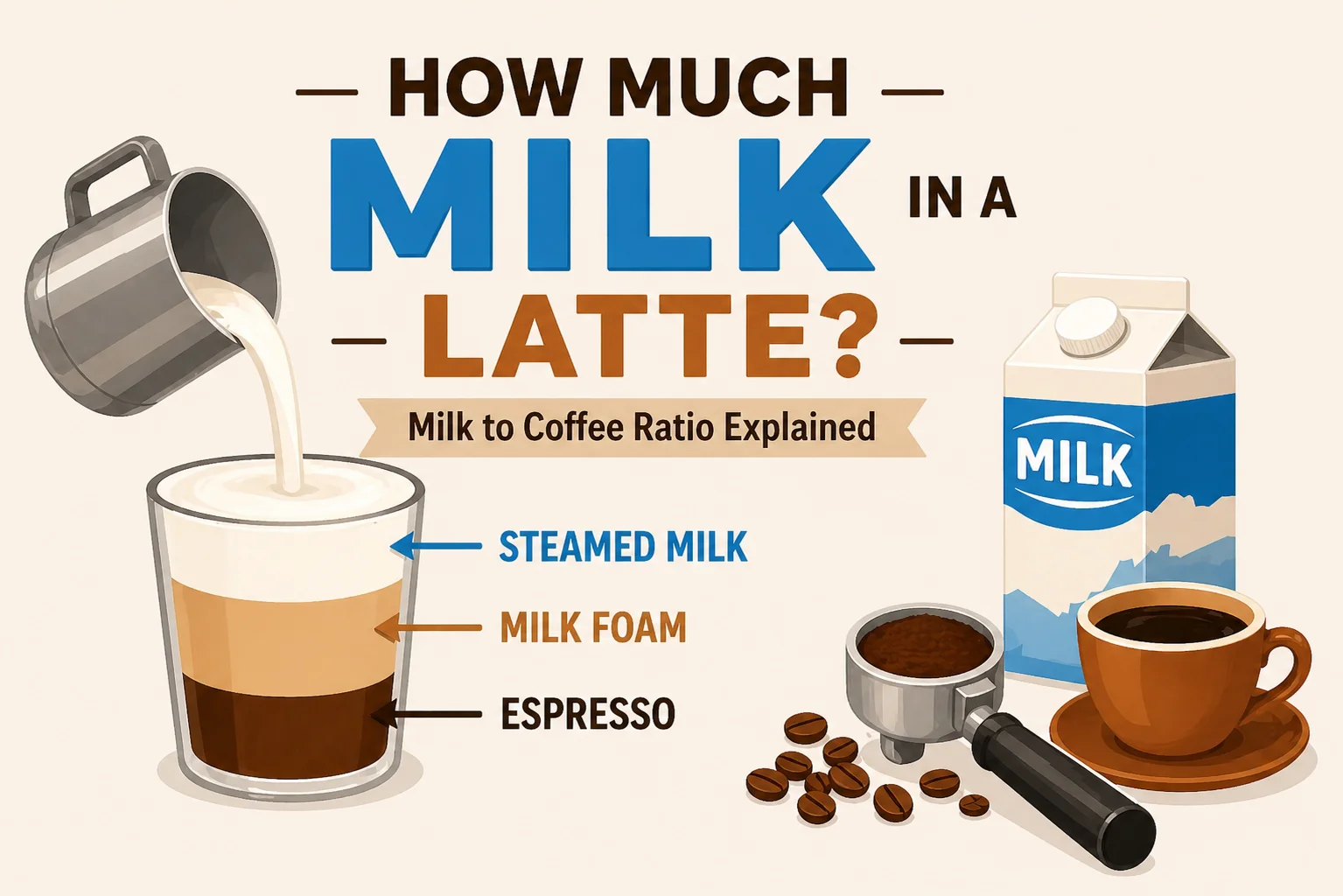
The latte milk-to-coffee ratio is the foundation of a well-balanced drink. A traditional latte usually uses a ratio between 1:3 and 1:6 (espresso: milk), mainly depending on the cup size, roast strength and personal preference of the person making it.
In case of speciality coffee circles, many baristas treat 1 :3 to 1:4 as the “golden ratio” for a latte: 1 part espresso to 3–4 parts steamed milk, finished with a thin layer of microfoam. This range keeps bitterness soft, acidity rounded, and milk sweetness noticeable without drowning the espresso.
At its core, a little usually consists of three main elements :
- Espresso (base)
- Steamed milk (main body)
- Microfoam (thin top layer)
For smaller cups (like 6–8 oz), the ratio usually stays closer to 1:4–1:6, which keeps the drink smooth yet flavorful. For larger takeaway-style cups (12–16 oz), the ratio usually shifts toward 1:3–1:4, since more espresso is added to maintain the strength.
Why the Ratio Matters
The ratio directly impacts:
- Strength: More milk = milder taste
- Texture: Proper milk steaming creates a creamy mouthfeel
- Balance: Too much espresso = harsh; too much milk = bland
A good latte should be creamy, slightly sweet, and espresso-forward without bitterness. You should aim for a final latte temperature of about 60–65 °C (150–160 °F); too hot scalds milk and masks sweetness, too cold dulls the flavour.
Many people add sugar when the latte tastes quite weak; in most cases, adjusting the ratio or the espresso strength improves the drink more than added sugar ever will.
How Much Milk in a Latte?
Latte Ratio Table
| Cup size | Espresso[ml] | Steamed Milk [ml] | Ratio |
| 160ml (≈ 5–6 oz) | 20-30ml | 90-120ml | 1:4–1:6 |
| 240 ml (≈ 8 oz) | 30-40ml | 120-180ml | 1:3–1:4 |
| 320 ml (≈ 10–12 oz) | 40-60ml | 180-240 | 1:4–1:6 |
Ratios for 8 oz vs 12 oz Cups
- 8 oz latte: Balanced and slightly stronger
- 12 oz latte: Creamier, requires more espresso to avoid dilution
How to Measure the Latte Ratio at Home
Use volume (ml), not just cup size: measure the espresso and milk, not just the cup.
- Use a scale or measuring jug for your first 5–10 lattes to lock in 1:3–1:4.
- For an 8-oz latte, a good starting point is around 30 ml espresso + 120–150 ml milk.
Key Insights
- More milk = smoother drink: But too much can mute espresso flavour
- Stronger espresso allows more milk: Darker roasts hold up better
- Double shots are standard, especially for cups above 240 ml.
If your latte tastes weak, you are most likely using too much milk or too little espresso
Latte vs Cappuccino vs Flat White Ratio
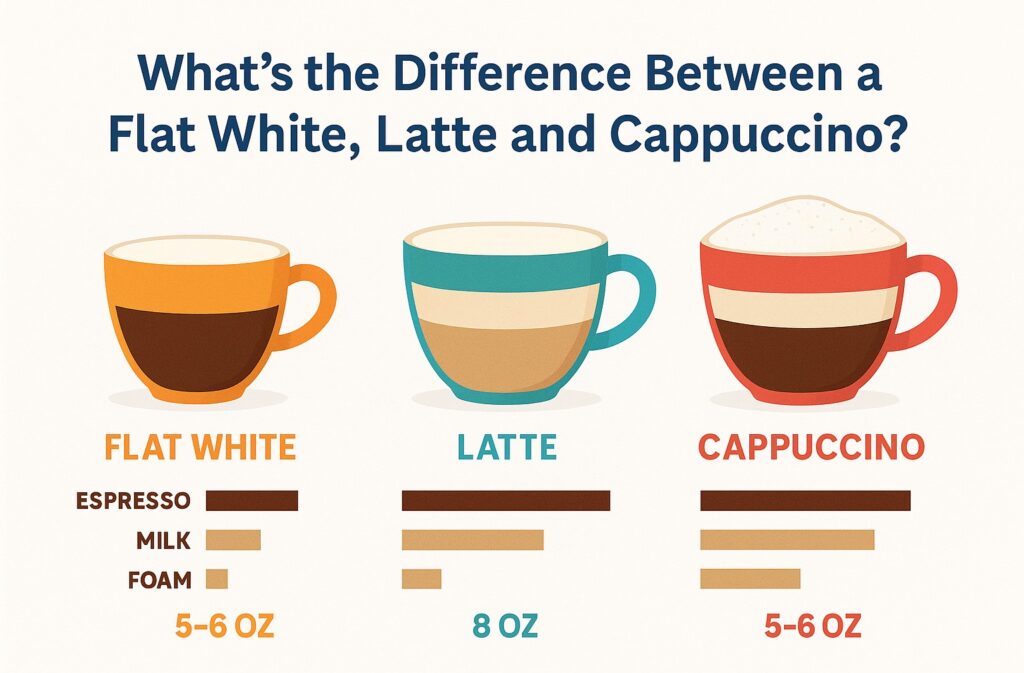
Understanding the ratios becomes easier when you compare drinks :
| Drink | Espresso (parts) | Milk (parts) | Foam Layer |
|---|---|---|---|
| Latte | 1 | 3–4 | Thin |
| Cappuccino | 1 | 1–1.5 | Thick |
| Flat White | 1 | 1.5–2 | Velvety |
What Makes Them Different?
- Latte: Milk-heavy, smooth, beginner-friendly
- Cappuccino: Stronger taste with airy foam texture
- Flat white: More espresso-forward with silky milk
A cappuccino feels stronger not because it contains more coffee, but because it has less milk and more foam, which amplifies its intensity.
Flat whites, on the other hand, use microfoam, which gives them a creamy texture without diluting the espresso too much.
Iced Latte Ratio vs Hot Latte Ratio
Most people make the mistake of using the same ratio for both the iced and hot alternatives, but they are not the same.
Why Iced Lattes Taste Different
- Ice displaces liquid volume
- Melting ice dilutes the drink over time
- Cold temperatures mute sweetness and flavour
Ideal Adjustment
- Hot latte:
- Standard ratio: 1:3 to 1:4 (espresso: milk by volume).
- A 240 ml (8 oz) hot latte typically uses ≈30 ml espresso + 120–150 ml milk
- Iced latte:
- Use slightly less milk than a hot latte.
- Aim for around a 1:2.5 to 1:3 ratio.
- Brew a slightly stronger espresso shot (or same dose in less space).
If you enjoy iced coffee variations, you might like trying a Diet Coke espresso shot recipe for a fizzy alternative.
Cow Milk vs Oat / Almond / Soy Latte Ratios
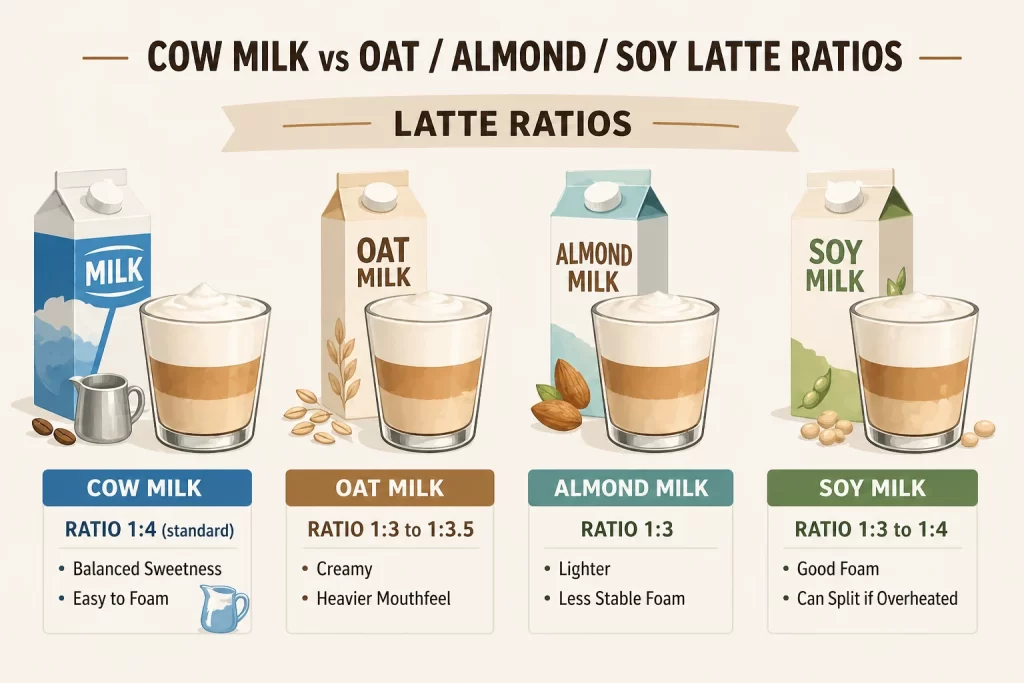
Not all milk acts the same way, and this is a major gap in most of the guides. Barista-style oat milk is usually formulated with added fats and stabilisers to improve steaming and foam texture.
Key Differences
- Cow milk: Balanced sweetness, easy to foam
- Oat milk: Creamy but heavier mouthfeel
- Almond milk: Lighter, less stable foam
- Soy milk: Good foam but can split if overheated
Ratio Adjustments
- Dairy milk: 1:4 (standard)
- Oat milk: 1:3 to 1:3.5 (to avoid overly thick texture)
- Almond milk: 1:3 (keeps flavour from becoming too weak)
- Soy milk: 1:3 to 1:4, depending on brand
Plant-based milks usually need less milk because they can feel heavier or less flavourful than dairy.
Equipment‑Based Adjustments
Different brewing setups also change the “ideal” ratio.
- Stovetop moka pot / espresso‑style maker:
- Use slightly less milk (closer to 1:2.5–1:3) because the coffee is usually stronger and less sweet.
- Strong‑dose espresso machines:
- Can safely go up to 1:4–1:5 without losing flavour.
Common Latte Ratio Mistakes (and How to Fix Them)
Even small mistakes can ruin the balance of your latte.
1. Too Much Milk
- Result: Bland, watery taste
- Fix: Increase espresso or reduce milk
2. Too Little Milk
- Result: Harsh, overly strong drink
- Fix: Add more steamed milk gradually
3. Poor Foam Control
- Result: Flat, lifeless texture
- Fix: Aim for microfoam, not bubbles
Proper microfoam helps create a smoother texture and more even flavour distribution in espresso-based drinks.
4. Same Ratio for Iced & Hot
- Result: Weak iced latte
- Fix: Reduce milk for iced versions
5. Weak Espresso Shot
- Result: No flavour base
- Fix: Use fresh beans and proper extraction
Weak extraction often comes from incorrect grind consistency, especially with stale or unevenly ground beans. Read more in how to grind coffee beans correctly.
FAQs
The standard latte milk-to-coffee ratio is usually 1:3 to 1:4, though it can be extended to 1:6 depending on the cup size and strength preference.
A double shot (≈ 40 ml espresso) usually pairs with 120–180 ml milk, depending on whether you prefer a stronger or creamier latte.
Yes, oat milk works very well. Use a slightly tighter ratio, like 1:3, to maintain balance and avoid an overly thick texture.
Start with 1:4 (espresso to milk). It’s the easiest way to achieve a balanced, café-style drink at home.
A latte has more milk (1:3–1:4), while a cappuccino uses less milk (1:1–1.5) and more foam, making it taste stronger.
Quick‑Start Latte Ratio Cheatsheet
- Beginners: start with 1:4 espresso‑to‑milk (volume).
- 8 oz hot latte: ≈ 30 ml espresso + 120–150 ml milk.
- Iced latte: reduce the amount of milk slightly (1:2.5–1:3) and use a stronger shot.
- Non‑dairy milk: try 1:3 first, then adjust toward 1:3.5 if too thick.
Final Thoughts
Mastering the latte milk to coffee ratio is less about strict rules and more about understanding the balance. Once you know how milk volume, espresso strength, and the temperature interact, you can easily adjust your latte to match the exact taste you want.
For most of the home baristas, starting off with a 1:4 ratio, then you can easily tweak it based on the cup size, milk type, and whether the drink is ice or hot, is the easiest path to regularly get great coffee.
If you want to build a strong coffee knowledge hub, you should consider pairing this guide with deeper breakdowns of flat white and cappuccino ratios to fully cover the espresso-based drink spectrum.