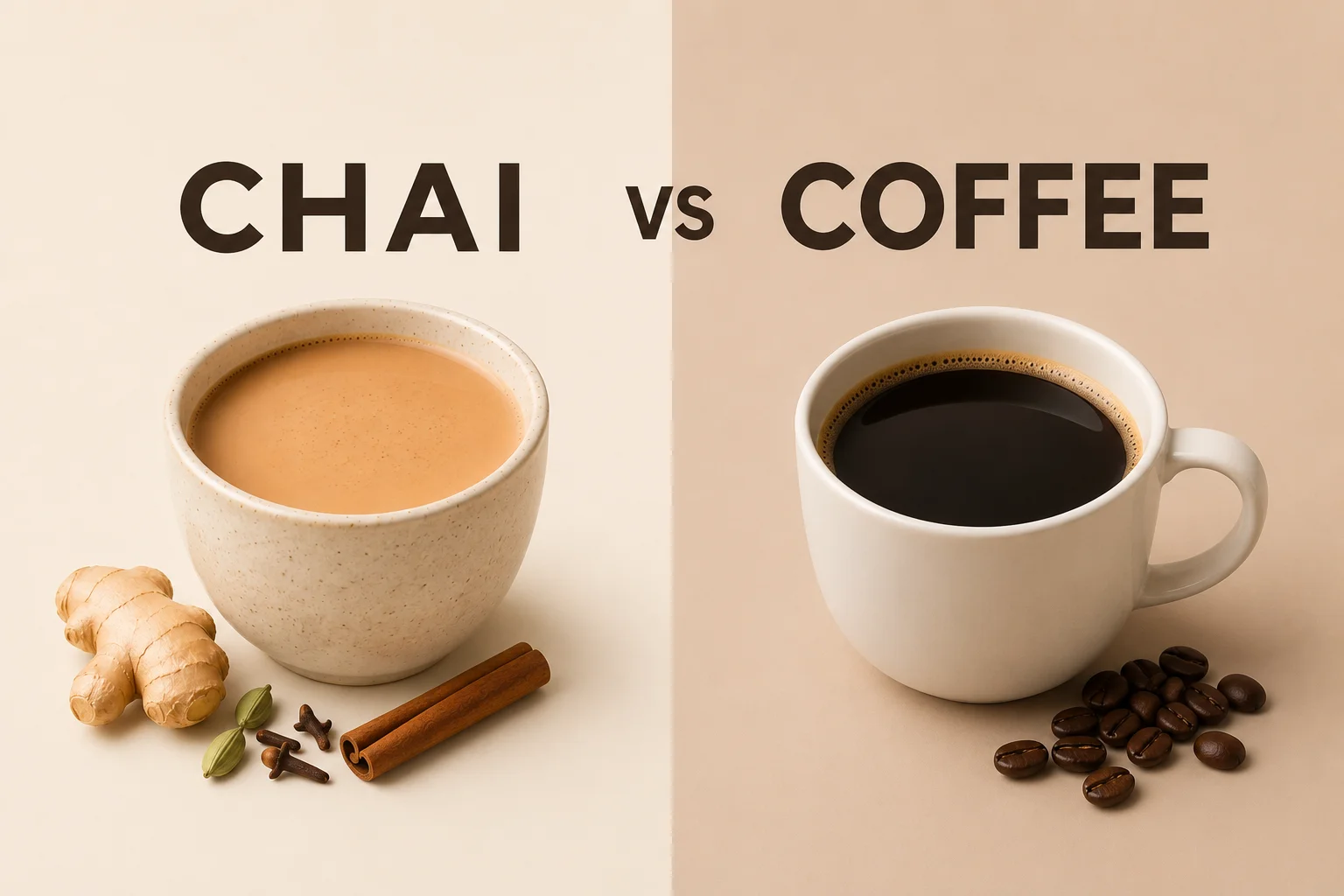
Every morning, millions of people around the world start with the same question: chai or coffee? While both the drinks give you an instant boost of energy and a comforting touch to your morning, the real chai vs coffee differences go far beyond just caffeine. From the flavour and health benefits to sustainability and cultural identity, each beverage provides you with a completely different experience from the others. After testing out homemade masala chai blends along with the coffee from cafes such as Starbucks and independent speciality coffee roasters across the USA, the differences in flavour, energy and experience become quite obvious.
Flavour Profiles and Ingredients
The biggest chai vs coffee differences start with flavour.
Chai is layered, aromatic and spice-forward. The traditional masala chai, which is now widely available across US cafes and grocery stores, combines black tea, milk and warming spices such as ginger, cardamom, cinnamon, cloves, and black pepper. Each of the ingredients gives the chai a unique flavour layer:
- Ginger adds warmth and slight heat
- Cardamom brings citrusy sweetness
- Cinnamon creates depth
- Cloves add earthy spice
- Black pepper sharpens the finish
Meanwhile, coffee, on the other hand, depends heavily on the bean origin and roast level. Light roast usually tastes fruity or floral, medium roasts, on the other hand, are nutty and quite chocolatey, while the dark roasts are lean, smoky and bitter.
Caffeine Content Comparison
One of the most searched chai vs coffee differences is caffeine.
| Metric | Chai | Coffee |
| Caffeine | 40–60mg | 95–165mg |
| Effect | Steady focus | Quick spike |
| Best Time | Throughout day | Morning |
Coffee contains nearly double and sometimes triple the amount of caffeine found in chai. That makes coffee ideal for rapid alertness and early morning productivity. However, the energy spike can also lead to jitters or crashes in the latter part of the day.
On the other hand, chia gives you a gentle stimulation because tea naturally contains L-theanine, an amino acid linked with calmer focus. This creates a smoother energy curve.
Coffee remains the more common daily choice in the US, especially during the busy morning hours when people want to have a strong caffeine boost. Chai, however, has been growing in popularity as an alternative for afternoon sipping, cafe treats and wellness-focused routines because it delivers you with a smoother and less intense energy experience.
Many people now compare coffee with alternative caffeine sources based on how energy feels throughout the day. Explore this further in matcha vs coffee: smoother buzz or quick jolt.
Health Benefits Breakdown
Both beverages contain antioxidants and can support overall wellness when consumed in moderation.
Shared Benefits
- Rich in antioxidants
- May support heart health
- Can improve mental alertness
- Lower risk of certain chronic diseases when consumed moderately
Unique Benefits of Chai
Chai’s spices provide additional wellness advantages.
- Ginger may aid digestion and reduce bloating
- Cloves contain antimicrobial properties
- Cinnamon may support blood sugar balance
- Cardamom is linked with digestive comfort
Because chai usually includes milk, it can also provide calcium and a smoother stomach feel compared to acidic coffee.
Unique Benefits of Coffee
Coffee shines in cognitive performance.
- Improves alertness and concentration
- Associated with metabolism support
- Popular before workouts for performance enhancement
- Linked with reduced fatigue
Some studies also connect moderate coffee intake with long-term brain health benefits.
Moderation Matters
Too much caffeine from either beverage can lead to:
- Sleep disruption
- Anxiety
- Acidity
- Increased heart rate
For most adults, limiting intake to around 3 cups daily is considered a balanced approach.
Cultural Origins: India vs USA
The cultural identity behind chai and coffee showcases two very different lifestyles.
In India, chai is deeply social. With street-side tea stalls known as chaiwallahs acting as social gathering spots where people pause to talk, relax and connect. Chai is usually homemade, shared with guests, and closely linked to comfort and routine.
Masala chai itself evolved during the British tea trade era, eventually becoming a uniquely Indian drink through the addition of spices such as ginger, cardamom, and cinnamon.
Coffee culture in the United States developed around productivity and café lifestyles. Coffee became associated with commuting, office routines, and fast-paced schedules. Over time, coffee shops have transformed into remote work hubs, meeting spaces and a part of modern urban lifestyle culture.
Chains such as Starbucks helped in the popularisation of the speciality coffee drinks across the USA, while independent cafés fueled the rise of espresso culture, cold brew, and artisan roasting.
At the same time, chai has slowly gained popularity in America through chai lattes, wellness cafés, and speciality tea brands. Many US consumers now view chai as a cosy alternative to coffee, especially during colder months or afternoon breaks.
The cultural contrast showcases the biggest chai vs coffee differences :
- Chai is associated with comfort, warmth, and slow rituals
- Coffee is linked with productivity, energy, and fast-paced routines
Cost Analysis
Cost can play a major role in deciding between chai and coffee, especially in the US, where café prices continue to rise.
Home Brewing Costs
| Beverage | Average Cost Per Cup |
| Chai | $0.58 |
| Coffee | $0.25 |
Basic drip coffee is usually cheaper to make at home because it requires you to have fewer ingredients and less preparation. Chai usually includes milk, spices, sweeteners and tea blends, which slightly increases the cost per serving.
However, homemade chai can still be far more affordable than buying drinks from cafés every day.
US Café Costs
| Beverage | Average Café Price |
| Chai Latte | $6 |
| Latte/Cappuccino | $5 |
In many US coffee chains, chai lattes now cost as much or more than the standard espresso drinks because of spice concentrates, milk customisation, and speciality preparation.
For regular café visitors, preparing beverages at home can lead to major yearly savings. Brewing your own coffee or chai instead of purchasing daily café drinks could save hundreds or even thousands of dollars yearly.
Sustainability Impact
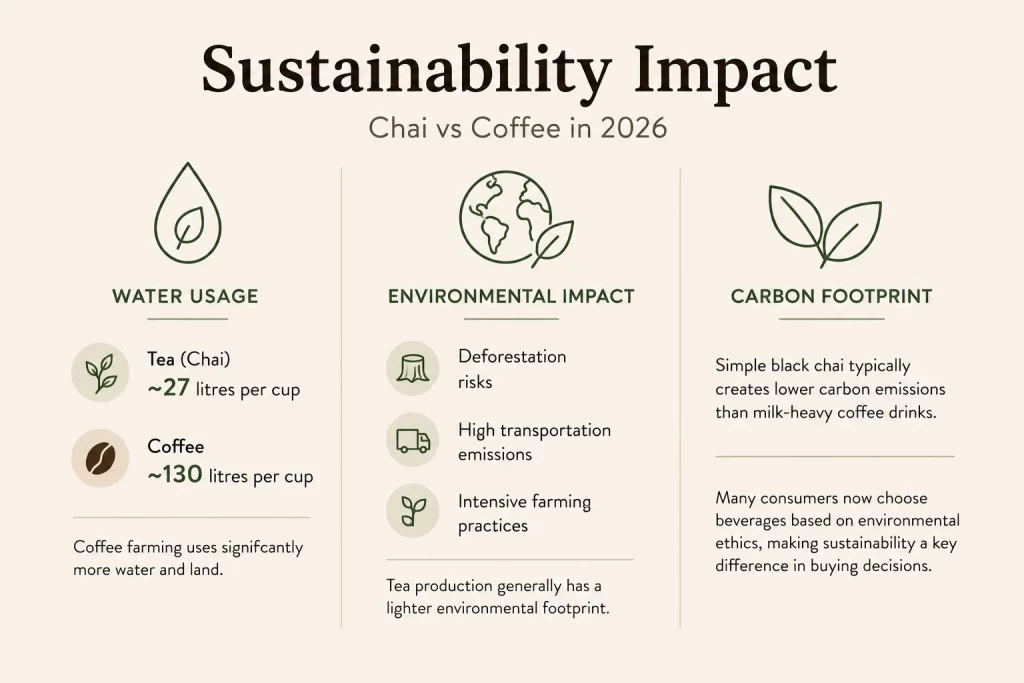
Sustainability has become a major part of the chai vs coffee conversation in 2026.
Water Usage
- Tea production: approximately 27 litres per cup
- Coffee production: approximately 130 litres per cup
Coffee farming generally requires significantly more water and land resources.
Environmental Impact
Coffee cultivation is also associated with:
- Deforestation risks
- High transportation emissions
- Intensive farming practices
Tea production tends to have a lighter environmental footprint, especially when sourced locally or organically.
Carbon Footprint
A simple black chai usually creates lower carbon emissions than milk-heavy coffee drinks such as cappuccinos or flavoured lattes.
Many younger consumers now choose beverages partly based on environmental ethics, making sustainability one of the emerging chai vs coffee differences shaping buying decisions.
2026 Beverage Trends
Beverage trends in 2026 show both drinks evolving rapidly.
Chai Trends
- Adaptogen chai blends for stress support
- Turmeric and ashwagandha infusions
- Organic artisanal masala mixes
- Viral “slow chai ritual” content online
Social media hashtags like #ChaiRitual continue growing among wellness-focused audiences.
Coffee Trends
- Protein coffee drinks
- Nootropic coffee blends
- Mushroom coffee alternatives
- Functional energy beverages
Coffee brands are increasingly marketing mental performance and fitness benefits. Some newer coffee trends also combine caffeine with fitness supplements for performance and recovery support. Read more in Can You Put Creatine in coffee safely?
The biggest shift is that consumers now want beverages that combine taste, wellness, and sustainability.
Which Should You Choose?
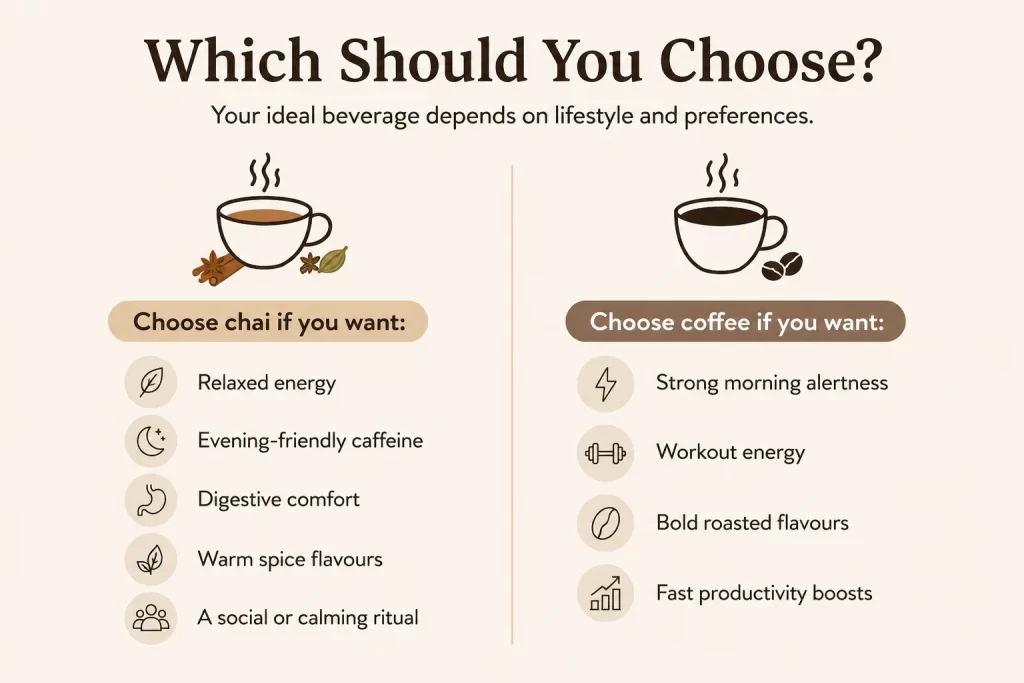
Your ideal beverage depends on lifestyle and preferences.
Choose chai if you want:
- Relaxed energy
- Evening-friendly caffeine
- Digestive comfort
- Warm spice flavours
- A social or calming ritual
Choose coffee if you want:
- Strong morning alertness
- Workout energy
- Bold roasted flavours
- Fast productivity boosts
After trying everything from speciality café coffees and homemade chai recipes to drinks from major US coffee chains, I still find myself reaching for chai more, especially during the colder months. The warming spices, smoother caffeine experience, and comforting feel make it easier on my stomach, while hot coffee can sometimes cause more acidity or gastric discomfort. During the summer, though, cold coffee becomes my go-to drink because it feels more refreshing and delivers a stronger energy boost.
That said, plenty of people enjoy both. A strong coffee in the morning and a chai latte in the afternoon has become a common balance for Americans who want energy early in the day and something calmer later on.
FAQS
1. Does chai taste sweeter than coffee?
Usually, yes. Traditional chai often includes milk and sweetener along with warming spices, giving it a naturally smoother and slightly sweeter taste compared to black coffee.
2. Does coffee stain teeth more than chai?
Coffee usually causes more noticeable teeth staining because of its darker pigments and acidity, though heavily brewed black chai can also contribute over time.
3. Which drink pairs better with food?
Chai pairs well with baked goods, breakfast items, and spicy foods, while coffee is more commonly paired with desserts, pastries, and brunch meals.
4. Are chai and coffee both available in dairy-free versions?
Yes. Both drinks are commonly served with oat milk, almond milk, soy milk, or coconut milk in most US cafés and coffee chains.