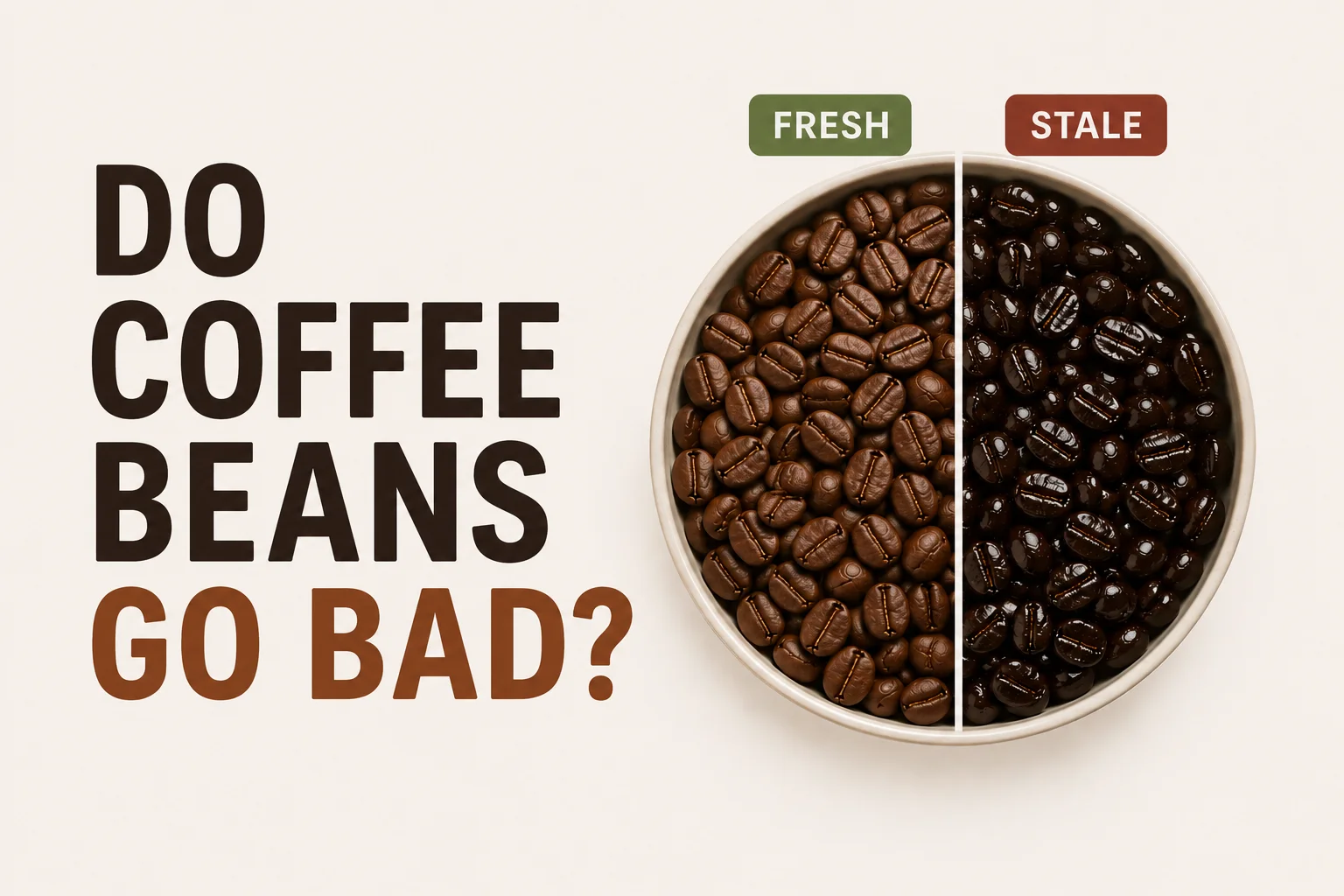
Coffee beans do go bad, but not always in the way most people think. In most of the cases, beans become stale coffee long before they become unsafe to drink. Understanding the roast dates, storage conditions and freshness signs can help you in brewing better coffee, wasting fewer beans.
Whether you buy speciality coffee weekly or stock up in bulk, this guide explains how long coffee beans stay fresh, how to identify spoiled beans and smart ways to revive older coffee at home.
Quick Answer: Do Beans Go Bad?
Yes, coffee beans eventually go bad. Roasted coffee gradually loses its aroma, flavour, and freshness after roasting due to exposure to oxygen, heat, moisture and light. Whole beans usually stay flavourful for several weeks, while the ground coffee stales much faster.
The important difference is quality vs safety. Most of the old coffee beans are simply flat and dull, not dangerous to your health. However, beans exposed to moisture or poor storage conditions can develop mould or unpleasant odours, which can make them unsafe to use.
Freshness depends heavily on:
- Roast date
- Packaging quality
- Storage method
- Whole bean vs ground coffee
If your coffee smells weak, produces little bloom during brewing, or tastes papery and lifeless, it is likely to be stale rather than spoiled.
What Happens to Coffee as It Ages
Coffee changes continuously after roasting. Even premium coffee beans begin losing their freshness once they come into contact with oxygen.
Coffee Chemistry in Simple Terms
Freshly roasted coffee contains hundreds of volatile aromatic compounds which create sweetness, fruitiness, chocolate notes and floral complexity. over the period of time, these compounds can break down through oxidation. Oxygen exposure is one of the biggest contributors to coffee staling and aroma loss over time.
Coffee also releases trapped carbon dioxide after roasting, a process called degassing. This gas is essential for proper espresso crema and pour-over bloom. As beans age, less gas remains inside the bean structure.
Another major change involves coffee oils. Oxygen gradually breaks down surface oils, especially in the darker roasts, which can create rancid or bitter flavours.
How Roast Level Affects Staling
Roast level changes how quickly coffee loses freshness.
Light Roast
- Denser bean structure
- Slower oil migration
- Longer flavor stability
- Better shelf life overall
Dark Roast
- More porous structure
- Oils appear on the surface faster
- Greater exposure to oxygen
- Can taste rancid sooner
Oily beans are not automatically bad. Dark roasts naturally develop the visible oils after roasting. The problem begins when those oils smell sour, musty or overly bitter.
How Long Do Coffee Beans Stay Fresh?
Coffee freshness varies depending on whether beans are whole, ground, frozen, or unroasted.
| Condition | Approximate Freshness |
| Whole beans (sealed) | 4–8 weeks |
| Whole beans (opened) | 2–4 weeks |
| Ground coffee | 1–2 weeks |
| Green coffee beans | 6–12 months |
| Frozen whole beans | 3–6 months |
These timelines are just estimates rather than strict expiration dates. Coffee stored properly in airtight containers can still produce acceptable results beyond these ranges, though the flavour quality may decline slowly
Factors That Change Freshness
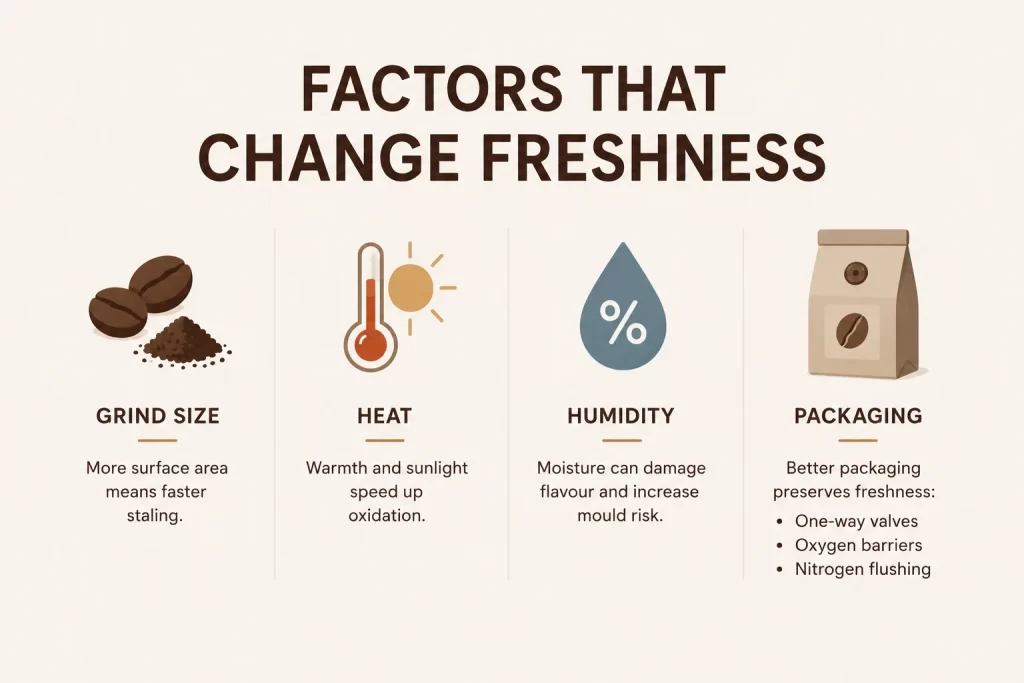
Several variables can speed up coffee staling:
Grind Size
Ground coffee loses freshness rapidly because more surface area is exposed to oxygen. Grind consistency and brewing method also influence how quickly coffee flavour changes after opening. Read our guide on how to grind coffee beans properly.
Heat
Warm kitchens, sunlight, and appliances accelerate oxidation.
Humidity
Moisture is one of the biggest enemies of coffee. Damp beans may develop mould or absorb unpleasant odours.
Packaging
High-quality coffee bags often include:
- One-way degassing valves
- Oxygen barriers
- Nitrogen flushing
These features significantly slow the loss.
Signs Coffee Beans Are Stale vs Unsafe
Many people confuse stale coffee with spoiled coffee. Knowing the difference between them helps avoid unnecessary waste.
Signs Your Coffee Is Stale
- Weak or faded aroma
- Minimal bloom during brewing
- Thin espresso crema
- Flat or papery taste
- Reduced sweetness
- Dull body and finish
Stale coffee is usually safe to consume, but it produces noticeably less enjoyable coffee.
Signs Coffee May Be Unsafe
Throw away coffee immediately if you notice:
- Visible mold
- Moisture clumping
- Musty smell
- Ammonia-like odor
- Wet or sticky beans
Moisture contamination creates the highest risk because coffee absorbs water and odours easily.
Simple Home Tests for Coffee Freshness
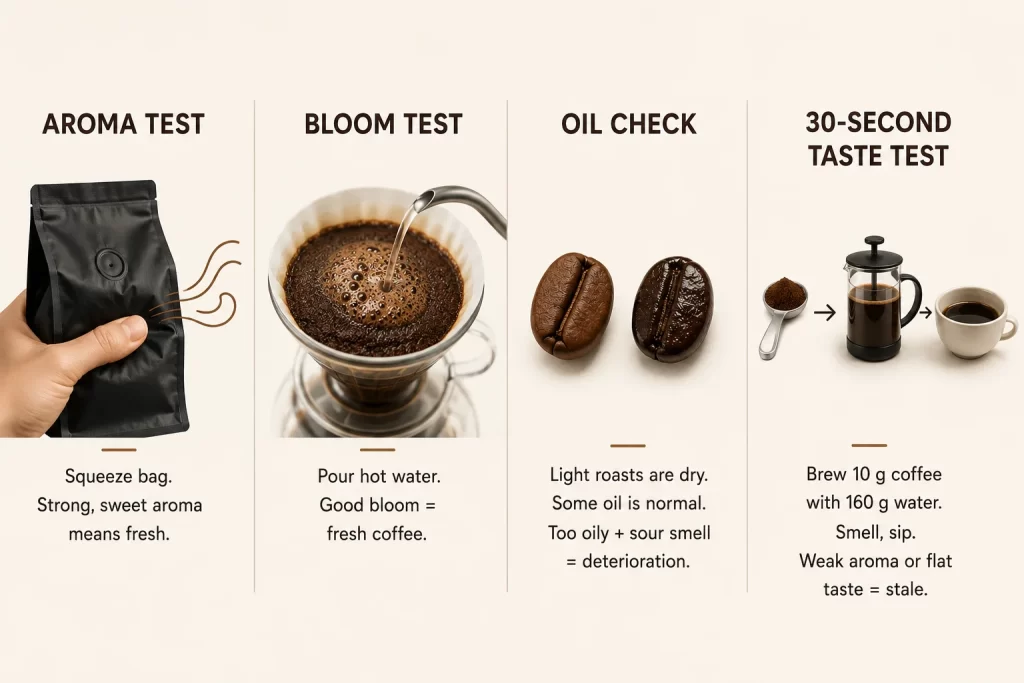
You do not need professional equipment to check the freshness of coffee at home.
Aroma Squeeze Test
If your coffee comes in a valve-sealed bag:
- Gently squeeze the bag.
- Smell the escaping aroma.
Fresh beans release a strong, sweet fragrance. Weak aroma usually indicates stale coffee.
Bloom Test
Fresh coffee produces visible bloom when hot water contacts the grounds.
To test:
- Brew a pour-over or French press.
- Pour a small amount of hot water first.
- Watch for bubbling and expansion.
Minimal bloom generally means the coffee has lost most of its trapped gases.
Oil Sheen Check
- Light roasts should appear mostly dry.
- Dark roasts usually develop slight oiliness naturally.
Excessively greasy beans with sour smells may be a sign of beans deterotaion
30-Second Tasting Protocol
Try this quick freshness test:
- Grind 10 g of coffee
- Brew with 160 g of water
- Smell wet grounds immediately
- Sip slowly after brewing
If the aroma feels weak and the flavour tastes flat or cardboard-like, the beans are likely stale.
Packaging, Roast Date, and Supply Chain
One of the biggest indicators of coffee freshness is the roast date.
Roast Date vs Best-By Date
Roast Date
Shows when coffee was actually roasted. This is the most important freshness reference.
Best-By Date
Usually much less useful because it may extend months into the future regardless of actual flavour quality.
Most speciality coffee tastes best:
- 7–14 days after roasting for espresso
- 5–21 days after roasting for filter coffee
Why Coffee Bags Have Valves
Premium coffee packaging often includes one-way valves that:
- Allow carbon dioxide to escape
- Prevent oxygen from entering
This protects freshness without causing bags to burst.
Nitrogen Flushing
Some roasters flush bags with nitrogen gas before sealing. This reduces oxygen exposure and slows down the staling.
What Buyers Should Look For
When buying speciality coffee, prioritise:
- Visible roast date
- Lot number
- Origin information
- Processing method
- Roast level transparency
Best Storage Practices for Coffee Beans
Good storage can dramatically extend coffee freshness.
Best Storage Rules
- Keep beans whole until brewing
- Store in airtight containers
- Keep away from heat and sunlight
- Avoid humid environments
- Use opaque containers if possible
Coffee stored near ovens, windows, or refrigerators tends to stale faster because heat, moisture, and temperature changes accelerate the oxidation process.
Should You Freeze Coffee Beans?
Freezing works well for long-term storage if it is done properly
Best Method
- Divide beans into small portions.
- Vacuum seal or use airtight freezer bags.
- Freeze unopened portions only.
- Thaw completely before opening.
Repeatedly opening frozen bags causes condensation, which damages coffee quality. Condensation introduces moisture into coffee beans, which can negatively affect flavour and freshness.
Reuse Ideas for Stale Coffee Beans
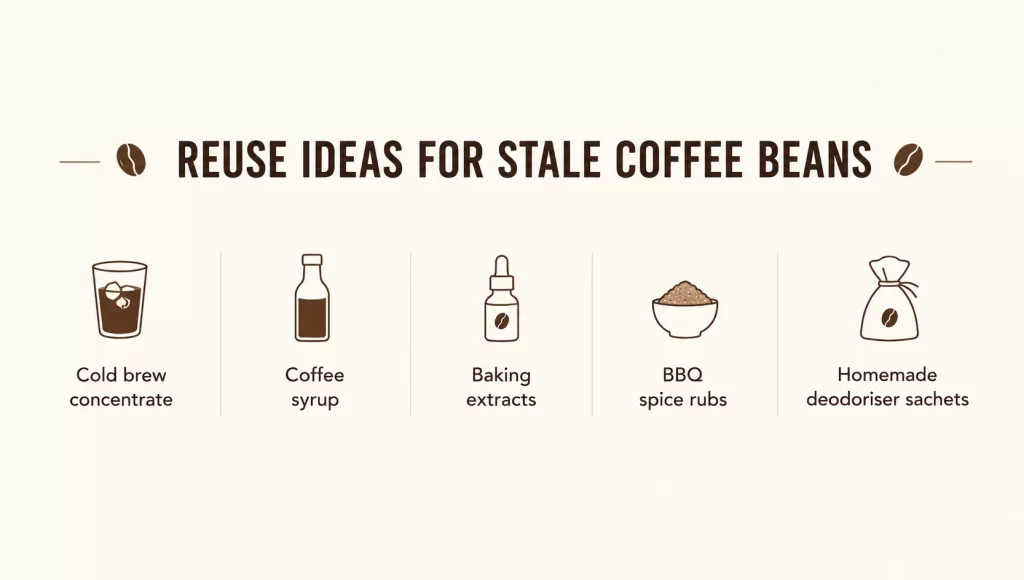
Older beans can still be useful even if they no longer brew excellent coffee.
Easy Reuse Ideas
- Cold brew concentrate
- Coffee syrup
- Baking extracts
- BBQ spice rubs
- Homemade deodoriser sachets
Because cold brew emphasises body more than delicate acidity, stale beans usually perform better there than in pour-over brewing. Different brewing styles can dramatically change how older coffee tastes in the cup. See the comparison of Americano vs black coffee explained.
FAQS
1. Does vacuum sealing keep coffee fresh longer?
Yes. Vacuum sealing reduces oxygen exposure, which slows oxidation and helps preserve aroma and flavour for longer periods compared to regular storage bags.
2. Can expired coffee beans still be brewed?
Usually yes, as long as the beans are dry and free from mould or strange odours. The coffee may simply taste dull, bitter, or flat.
3. Why do supermarket coffee beans last longer?
Many supermarket coffees are nitrogen-flushed and packaged for shelf stability rather than peak flavour freshness. They remain drinkable longer but may not taste as good as freshly roasted speciality coffee.
4. Is it safe to drink coffee made from old beans?
Old coffee is generally safe if stored properly and kept dry. However, beans exposed to moisture or mould should never be consumed.
Final Thoughts
Coffee freshness is usually treated like a strict expiration countdown, but real-world brewing is far more flexible. Some coffees remain enjoyable well beyond their “ideal” window, while others change their character in interesting ways as they age. Personal preference, brewing style, and roast profile all influence how noticeable staling feels in the cup.
Instead of chasing perfect freshness obsessively, focus on consistency. Building a simple routine around buying, storing, and brewing coffee thoughtfully usually matters more than exact dates on a bag. Even older beans can still be useful for cold brew, baking, or experimentation, which makes coffee less wasteful and more approachable for everyday drinkers.