Few drinks are closely linked to energy and focus as coffee. But if your goal is to get the strongest possible caffeine kick, not every coffee is equal. Some beans naturally have far more caffeine content than others, while the brewing style and serving can significantly change how much caffeine ends up in your cup.
The short answer is simple: coffee made from the Rosbuta beans usually contains the most caffeine per serving. As compared with the arabica beans, Robusta naturally have higher caffeine levels, which is why it is usually used in instant coffee, espresso blends and extra-strength products.
However, bean type is only part of the story. Brew methods such as cold brew, espresso and concentrated drip coffee can further increase the caffeine content. Ready-to-drink bottled coffees and large cafe servings may also contain surprisingly high amounts of caffeine in just a single container.
This guide will explore the coffees with the highest amount of caffeine levels, including :
- Robusta vs Arabica caffeine content
- How brewing methods affect caffeine extraction
- High-caffeine coffee drinks and brands
- Common myths about coffee strength
- Safe daily caffeine limits
The information in this article is backed by caffeine-content studies, coffee industry data, and major health guidelines to help you make informed choices about your coffee intake.
What Does “Most Caffeine” Really Mean?
When people ask which coffee has the most caffeine, they may actually mean several different things by that. Caffeine can be measured in multiple ways, and understanding the difference helps explain why some coffees feel stronger than others.
Caffeine Per Gram of Coffee Beans
This refers to how much caffeine naturally exists inside the coffee beans themselves. Robusta beans contain a much higher amount of caffeine than the Arabica beans, which makes them naturally stronger before the brewing process even begins.
Caffeine Per Cup
This is what most of the people actually consume. The total amount of caffeine in a cup depends on :
- The amount of coffee grounds used
- Brewing time
- Water temperature
- Bean type
- Serving size
A large 16–24 oz takeaway coffee can contain far more caffeine than a small espresso shot, even if espresso tastes stronger.
Caffeine Per Millilitre
Espresso has one of the highest caffeine concentrations per ml because it is brewed under pressure using a compact dose of coffee, but the serving size is small, so the total caffeine may still be lower than that of a large drip coffee.
Serving size matters more than many people realise. A standard 8-oz (240 ml) cup differs greatly from modern café servings, where a “large” coffee may contain double or triple the liquid volume.
For the rest of this guide, we will focus on the real-world cups, shots, cans and bottles people actually drink every day,
Robusta Contains Up to 2–3x More Caffeine Than Arabica.
The biggest factor behind caffeine strength is the coffee bean itself.
The two most common commercial coffee species are:
- Arabica
- Robusta
Robusta beans naturally contain much more caffeine by weight than Arabica beans.
Typical Caffeine Levels
| Bean Type | Typical Caffeine % by Weight | Typical Taste | Common Uses |
| Arabica | ~1.1–1.7% | Smooth, sweet, acidic | Speciality coffee, cafés |
| Robusta | ~2–4.5% | Strong, bitter, earthy | Instant coffee, espresso blends, high-caffeine products |
Robusta evvoeld with higher caffeine content partly as a natural pest defence. That extra caffeine gives the beans a more bitter and intense flavour profile as compared with arabica.
Why Arabica Is More Popular
Even though the Arabica contains less caffeine, it dominates the speciality coffee world because of its smoother taste and wider flavour range. Arabica usually delivers fruity, floral, chocolatey or caramel notes, which many coffee drinkers prefer to have.
Why Robusta Is Used in Strong Coffee
Robusta is commonly found in:
- Instant coffee
- Espresso blends
- Commercial “extra strong” coffees
- Ready-to-drink canned coffee beverages
Its higher caffeine content also helps create thicker crema in espresso, which is why many Italian espresso blends include some Robusta.
Some high caffeine products even use 100% Robusta beans specifically to maximise caffeine levels.
If your main goal is caffeine rather than flavour complexity, Robusta-based coffee is usually the strongest option available.
How Brewing Method Affects Caffeine
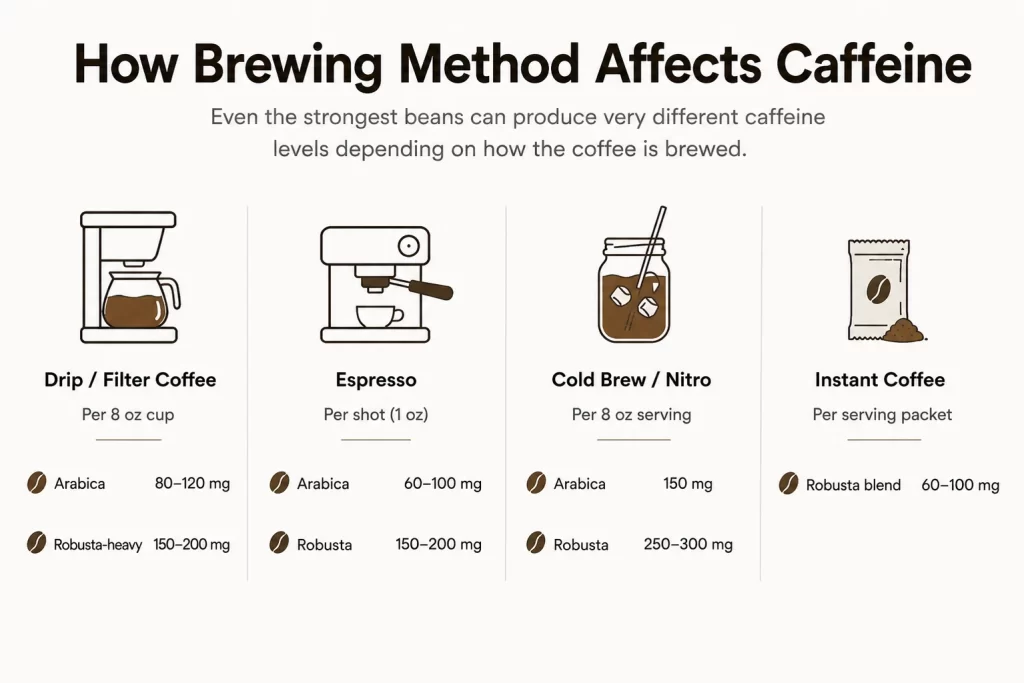
Even the strongest beans can produce very different caffeine levels depending on how the coffee is brewed.
Drip / Filter Coffee
Standard drip coffee is one of the most common brewing methods worldwide.
Typical caffeine levels per 8 oz cup:
- Arabica drip coffee: ~80–120 mg
- Robusta-heavy drip coffee: ~150–200 mg
Caffeine extraction depends on grind size, water temperature, coffee dose, and brew time. Longer extraction and larger coffee doses generally increase total caffeine. Grind size and brewing technique also play a major role in caffeine extraction and flavour strength. Read our guide on how to grind coffee beans properly.
Espresso
Espresso is highly concentrated because hot water is forced through finely ground coffee under pressure.
Typical caffeine levels:
- Arabica single shot: ~60–100 mg
- Robusta espresso shot: ~150–200 mg
Many people assume espresso has the most caffeine overall, but the serving size is very small. Per ml, espresso is extremely concentrated, but a large mug of drip coffee may still contain more total caffeine.
Cold Brew and Nitro Coffee
Cold brew is usually perceived as much stronger because it uses long steeping times and high coffee-to-water ratios.
Typical caffeine levels per 8 oz serving:
- Arabica cold brew: ~150 mg
- Robusta cold brew: ~250–300 mg
Nitro cold brew can feel even stronger because of its creamy texture and concentrated serving style.
Instant Coffee
Instant coffee is frequently made with Robusta or Robusta blends because the beans are cheaper and naturally stronger.
Typical caffeine content:
- ~60–100 mg per serving packet
Quality varies significantly, but instant coffee remains one of the easiest ways to consume high caffeine quickly and conveniently.
| Drink Type | Bean Type | Typical Caffeine per 8 oz | Notes |
| Drip Coffee | Arabica | ~80–120 mg | Standard café coffee |
| Drip Coffee | Robusta Blend | ~150–200 mg | Stronger bitterness |
| Espresso | Arabica | ~60–100 mg per shot | Highly concentrated |
| Espresso | Robusta Blend | ~150–200 mg | Common in strong espresso |
| Cold Brew | Arabica | ~150 mg | Long extraction |
| Cold Brew | Robusta | ~250–300 mg | Very high caffeine |
| Instant Coffee | Robusta Blend | ~60–100 mg | Convenient and variable |
Ready-to-Drink and High-Caffeine Coffee Brands
. The rise of ready-to-drink coffee has created an entire market focused on caffeine strength.
What Makes a Coffee “High-Caffeine”?
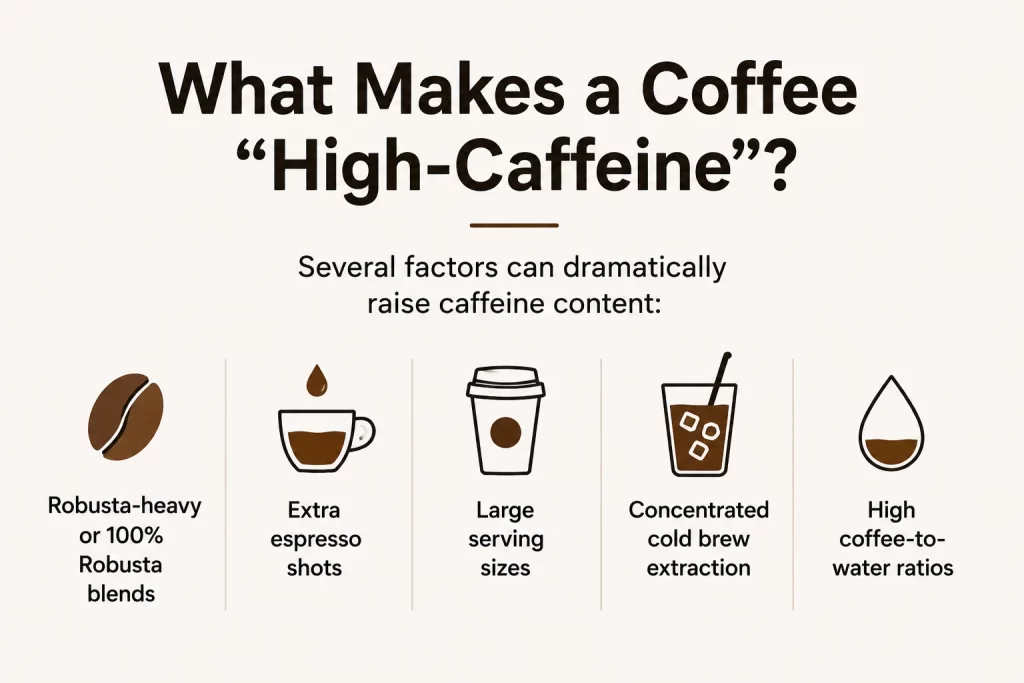
Several factors can dramatically raise caffeine content:
- Robusta-heavy or 100% Robusta blends
- Extra espresso shots
- Large serving sizes
- Concentrated cold brew extraction
- High coffee-to-water ratios
Some canned and bottled coffees contain caffeine levels similar to multiple standard cups of coffee in a single serving.
Examples of High-Caffeine Coffees in the U.S.
The U.S. coffee market includes several drinks and brands known for especially high caffeine content. Many achieve this by using larger serving sizes, concentrated cold brew methods, or Robusta-heavy blends.
Starbucks
Starbucks provides some of the highest-caffeine mainstream café drinks in the U.S. Large cold brews, iced coffees, and blonde roast drip coffees can exceed 300–400 mg of caffeine depending on size.
Dunkin’
Dunkin’ coffees are also known for strong caffeine levels, especially in large iced coffee servings. Their brewed coffee usually contains more caffeine than many casual drinkers expect.
Death Wish Coffee
Death Wish Coffee is marketed specifically as an ultra-high-caffeine coffee. It uses a blend of Arabica and Robusta beans to create a stronger caffeine profile than standard supermarket coffee.
Black Insomnia Coffee
Black Insomnia became popular for advertising extremely high caffeine levels per cup. It is designed primarily for consumers seeking maximum stimulation.
Biohazard Coffee
Biohazard Coffee markets itself around very high caffeine concentration and is usually purchased by heavy coffee drinkers looking for stronger brews.
Monster Java
Monster Java combines coffee with energy-drink style caffeine levels, creating ready-to-drink canned beverages that can contain very high caffeine amounts in one serving.
High-Caffeine Coffee Brands in the U.S.
| Brand / Product | Bean Type | Typical Caffeine per Serving | Availability |
| Starbucks Blonde Roast | Arabica Blend | ~300–400 mg (large size) | U.S. cafés nationwide |
| Dunkin’ Iced Coffee | Arabica Blend | ~200–300 mg | U.S. nationwide |
| Death Wish Coffee | Arabica + Robusta | ~300+ mg per cup | Online & retail |
| Black Insomnia Coffee | Robusta Blend | ~300–400 mg | Online specialty retailers |
| Biohazard Coffee | Robusta Blend | ~400+ mg | Online |
| Monster Java RTD | Blend | ~200–300 mg per can | Convenience stores & supermarkets |
How to Choose the Right High-Caffeine Coffee for You
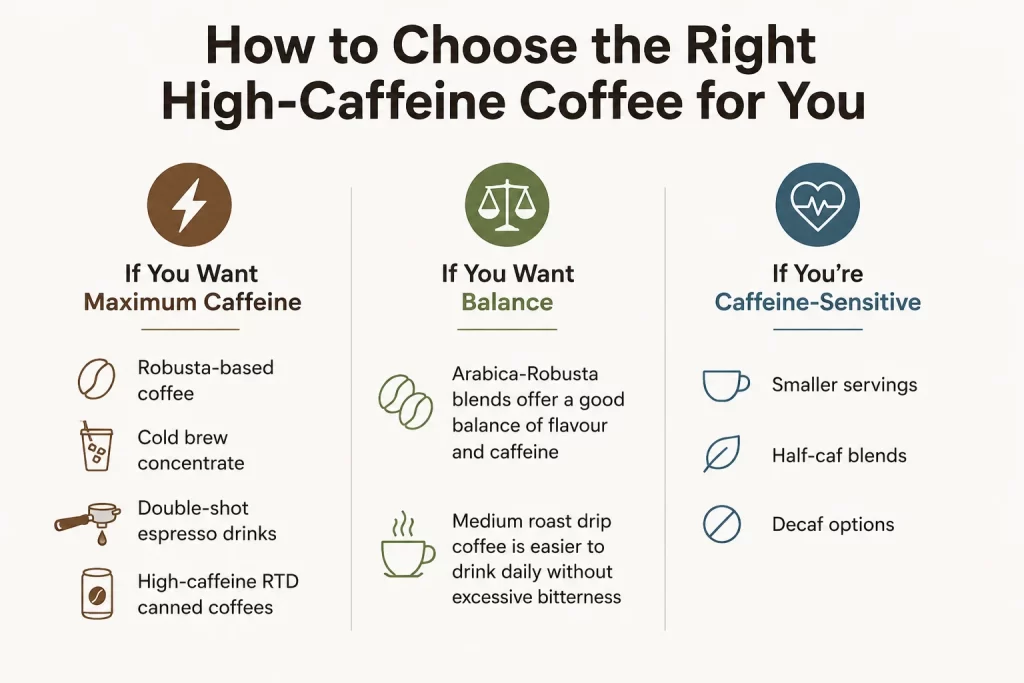
Different people tolerate caffeine differently, so the best high-caffeine coffee depends on your goals and sensitivity.
If You Want Maximum Caffeine
Choose:
- Robusta-based coffee
- Cold brew concentrate
- Double-shot espresso drinks
- High-caffeine RTD canned coffees
These products often provide the strongest caffeine impact per serving.
If You Want Balance
Arabica-Robusta blends can offer a good compromise between flavour and caffeine strength.
Medium roast drip coffee is often easier to drink daily without excessive bitterness.
If You’re Caffeine-Sensitive
Consider:
- Arabica-only coffee
- Smaller serving sizes
- Half-caf blends
- Decaf options
Some people experience anxiety, insomnia, or rapid heartbeat even at moderate caffeine levels. Many coffee drinkers also compare coffee with smoother caffeine alternatives for steadier energy and focus. See the comparison in matcha vs coffee: smoother buzz or quick jolt.
Find Your Caffeine Level
If you are new to coffee, avoid extremely high-caffeine RTD cans or concentrated cold brews. Heavy coffee drinkers should still spread their caffeine intake throughout the day and stay within the recommended limits whenever possible.
Safety, Daily Limits, and When to Be Cautious
Most health guidelines suggest that healthy adults should stay below approximately 400 mg of caffeine per day.
That amount may equal:
- 3–4 regular drip coffees
- 2 strong cold brews
- Several espresso shots
- One or two high-caffeine RTD coffees
Certain groups should be more cautious with caffeine intake, including:
- Pregnant women
- Teenagers
- People with anxiety disorders
- Individuals with heart conditions
- Those taking stimulant-sensitive medications
Signs of excessive caffeine intake may include:
- Jitters
- Insomnia
- Rapid heartbeat
- Anxiety
- Digestive discomfort
Because caffeine tolerance varies widely, some people may experience symptoms even at levels well below 400 mg daily.
If you are unsure whether your caffeine intake is appropriate for your health condition or medication use, you should consult a qualified healthcare professional.
Conclusion
If you are looking for the coffee with the most caffeine, Robusta-based coffee is usually the clear winner for you. Robusta beans naturally contain far more caffeine than Arabica, which makes them common in instant coffee, espresso blends, cold brew concentrates, and high-caffeine commercial products.
However, stronger does not always mean better for every coffee drinker. Some people may prefer the smoother flavour and lower caffeine levels of Arabica coffee, while others may enjoy the bold taste and higher caffeine punch of Robusta blends.
The best choice depends on your caffeine tolerance, flavour preference, and how you drink your coffee daily. Instead of focusing only on “extra strong” labels, choose a coffee which matches both your taste and your comfort level with caffeine.
FAQs
1. Which coffee chain sells the strongest coffee?
Several U.S. coffee chains provide you with high-caffeine drinks, but caffeine levels vary by size and preparation. Large cold brews, iced coffees, and blonde roast coffees from major chains usually contain some of the highest caffeine amounts sold commercially.
2. Why do some coffees make you feel more awake than others?
Caffeine content is one factor, but factors such as sugar, serving size, drinking speed, sleep quality, and personal caffeine tolerance can also affect how energised you feel after drinking coffee.
3. Can coffee lose caffeine during storage?
Coffee beans slowly lose flavour and aroma over time, but caffeine remains relatively stable during normal storage. Older coffee may taste weaker without actually containing much less caffeine.
4. Does adding milk reduce caffeine in coffee?
Milk does not remove caffeine from coffee. However, adding milk increases the total drink volume and can make the coffee taste milder and less intense.