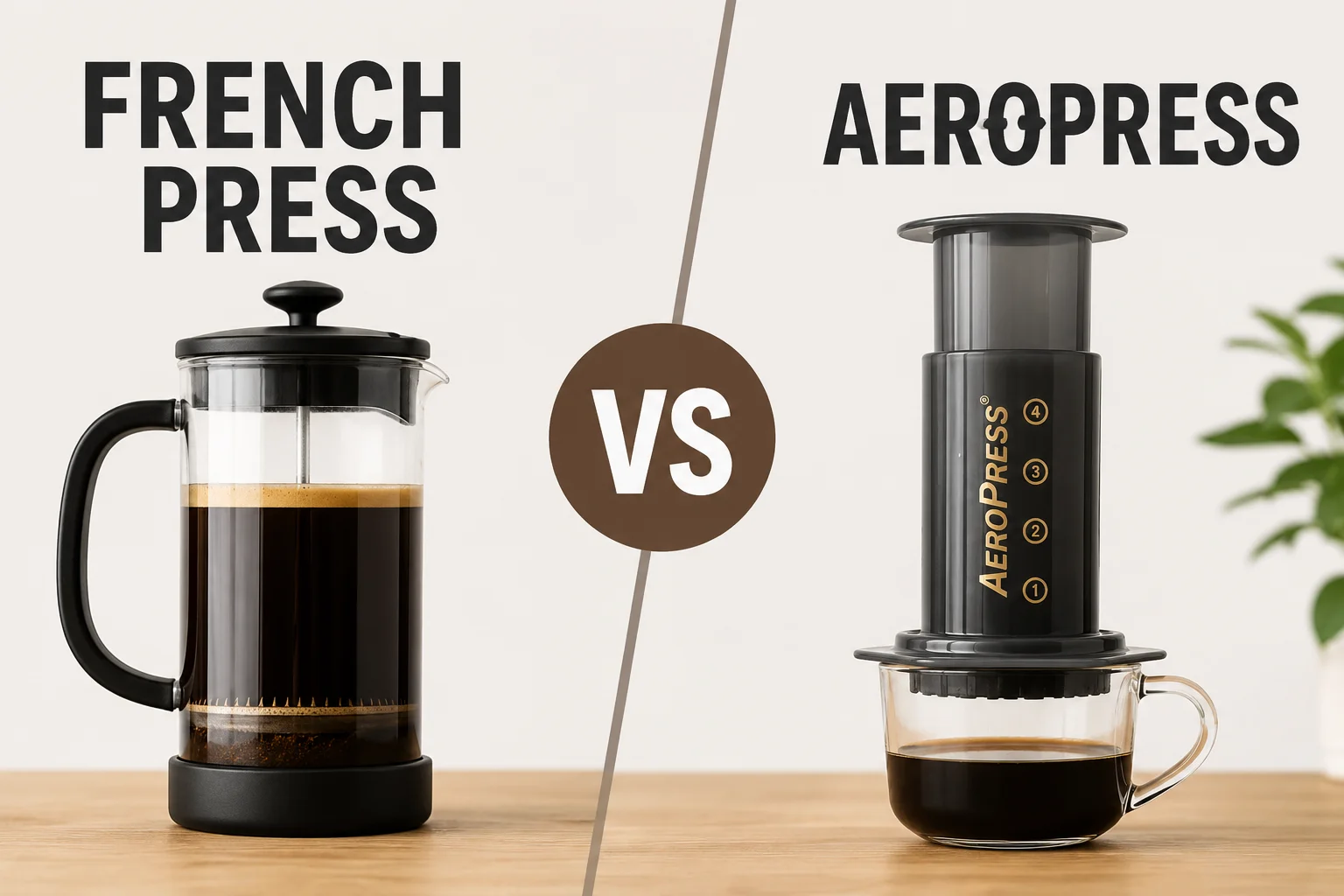
You love coffee, but choosing between a French press and an Aeropress can feel quite difficult sometimes. Both are quite affordable, beginner-friendly brewing methods, yet they produce very different kinds of coffee and suit different lifestyles.
A French press is known for its bold, rich coffee with a heavy body and simple brewing. It is ideal for large servings and relaxed home brewing. The Aeropress, on the other hand, is quite compact, fast, and travel-friendly, producing much cleaner and brighter coffee with less sediment.
This guide compares the French press and Aeropress based on taste, brewing style, cleanup, portability, cost, and ease of use to help you choose the right coffee maker for your daily routine. We tested both methods with different beans and grind sizes to see which brewer performs best in real-world use.
How the French Press Works
A French press is an immersion-style coffee maker which uses a metal mesh filter and plunger. Coffee grounds steep directly in the hot water for several minutes before the plunger separates the grounds from the brewed coffee.
Basic Brewing Process
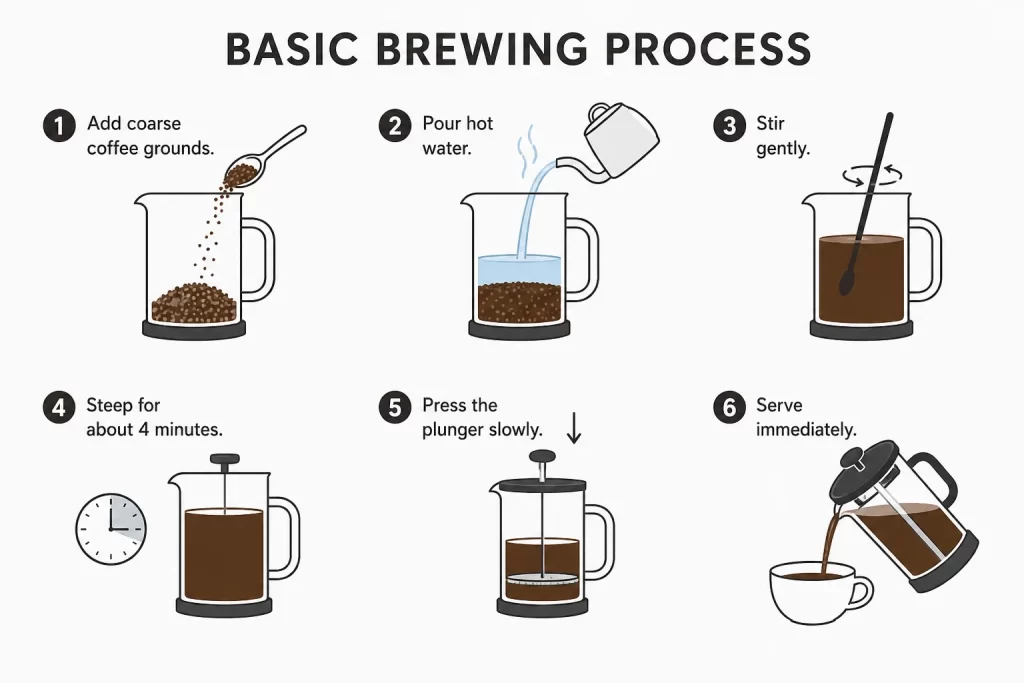
- Add coarse coffee grounds.
- Pour hot water.
- Stir gently.
- Steep for about 4 minutes.
- Press the plunger slowly.
- Serve immediately.
Because the metal filter allows natural coffee coils to remain in the cup, French press coffee has a rich, full-bodied texture with a heavier mouthfeel. It also produces more sediment than the paper filter brewing methods.
French Press brewers come in multiple sizes, commonly:
- 0.35 L
- 0.5 L
- 0.8 L
- 1.0 L
This makes them excellent for brewing 2–4 cups at once. They pair especially well with medium-dark and dark roasts, which focus on chocolatey and nutty flavours.
French Press Pros & Cons
Pros
- Simple and beginner-friendly.
- Great for brewing multiple cups.
- Produces bold, rich coffee.
- No paper filters required.
Cons
- Cleanup can be messy.
- Easy to over-extract if coffee sits too long.
- More sediment in the cup.
- Glass models are not ideal for travel.
French Press Recipe
This balanced “sweet spot” recipe works well for most coffees.
Ratio
1:15
Example:
- 30 g coffee
- 450 g water
Grind & Temperature
- Coarse grind like sea salt.
- Water temperature:
Steps
- Preheat the French Press.
- Add coffee grounds.
- Pour a little water for blooming.
- Add remaining water and stir gently.
- Steep for 4 minutes.
- Press slowly and serve.
Tips
- Do not plunge aggressively.
- Avoid letting coffee sit too long after brewing.
- Use freshly ground beans for the best flavour.
How Aeropress Works
The Aeropress combines immersion brewing with gentle pressure. It uses a plastic chamber, plunger and paper or metal filter to create smooth, clean coffee very quickly.
Basic Brewing Process
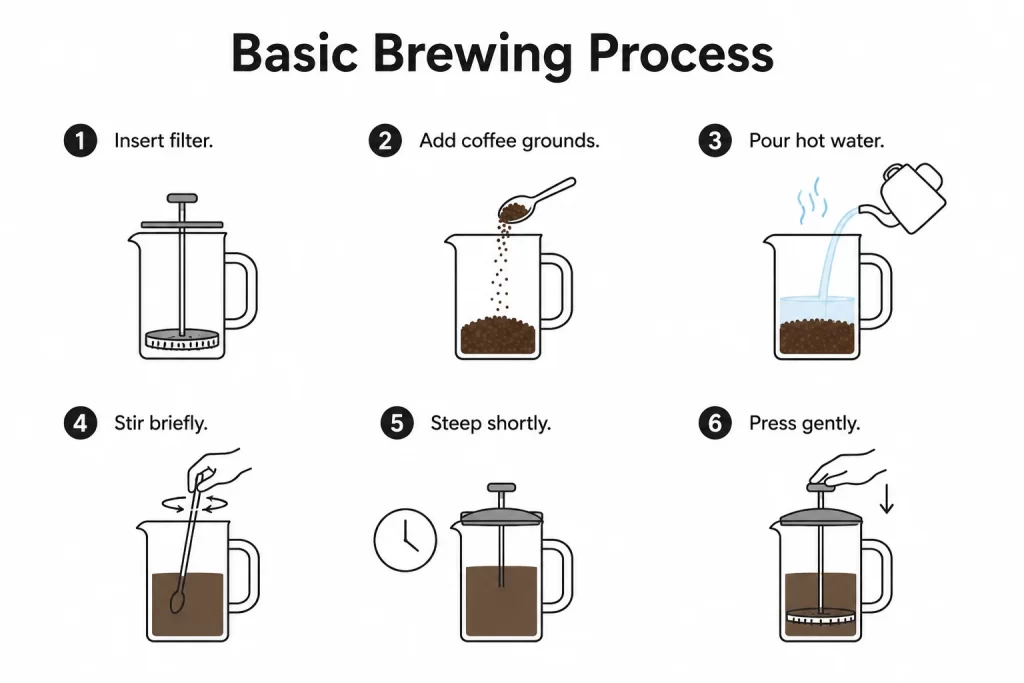
- Insert filter.
- Add coffee grounds.
- Pour hot water.
- Stir briefly.
- Steep shortly.
- Press gently.
Unlike the French Press, the Aeropress uses paper filtration, which removes most of the oils and sediment. Paper filters trap more coffee oils and fine particles, creating a cleaner and lighter-bodied cup. The result is a cleaner, brighter cup with more clarity.
There are two popular brewing styles:
Standard Method
The Aeropress sits directly on the mug while brewing.
Inverted Method
The brewer is flipped upside down during steeping, allowing greater control over extraction before pressing.
Aeropress brewing is popular among travellers because the brewer is lightweight, compact, and durable.
Aeropress Pros & Cons
Pros
- Fast brewing in 1–2 minutes.
- Compact and portable.
- Extremely easy cleanup.
- Produces clean, bright coffee.
Cons
- Smaller batch sizes.
- Requires paper filters unless using metal filters.
- More variables to experiment with.
Aeropress Recipes
Standard Aeropress Recipe
Ratio
1:12
Example:
- 18 g coffee
- 220 g water
Grind & Steps
- Medium-fine grind.
- Insert the filter and rinse it.
- Add coffee and water.
- Stir for 10 seconds.
- Steep for 1 minute.
- Press slowly for 20–30 seconds.
This method creates a smooth and balanced cup.
Inverted Aeropress Method
The inverted method allows longer immersion and often creates sweeter, fuller coffee.
Steps
- Assemble upside down.
- Add coffee and water.
- Stir and steep for 1–2 minutes.
- Attach the cap and flip carefully.
- Press gently.
This style is popular with speciality coffee enthusiasts because it gives greater control over extraction.
French Press vs Aeropress Comparison
| Category | French Press | Aeropress |
|---|---|---|
| Brew Time | 4–5 min | 1–2 min |
| Grind Size | Coarse | Medium-fine |
| Flavor | Bold & heavy | Clean & bright |
| Sediment | Higher | Very low |
| Batch Size | 2–4 cups | 1–2 cups |
| Cleanup | Messier | Very easy |
| Portability | Moderate | Excellent |
| Ongoing Cost | None | Filter cost |
| Best For | Families | Travelers |
What These Differences Mean
French Press brewing focuses on body, richness, and larger servings. Aeropress prioritises speed, portability, and flavour clarity.
If you enjoy thick, comforting coffee, French Press usually feels more satisfying. If you prefer lighter, cleaner flavours, Aeropress often performs better.
When to Choose a French Press
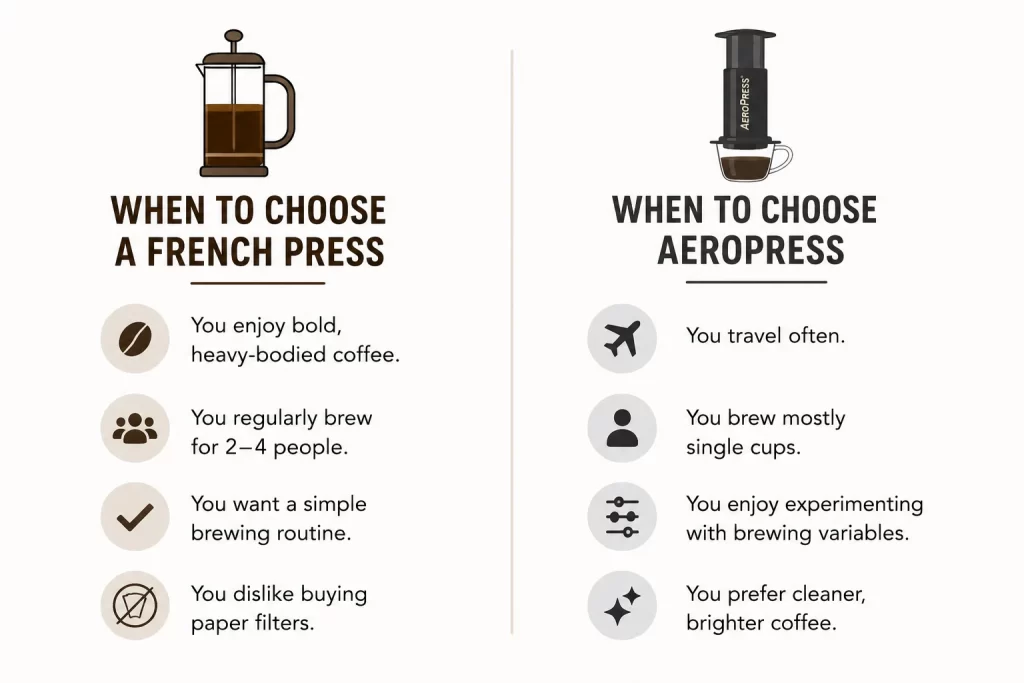
Choose a French Press if:
- You enjoy bold, heavy-bodied coffee.
- You regularly brew for 2–4 people.
- You want a simple brewing routine.
- You dislike buying paper filters.
French Press brewing is especially appealing for relaxed home coffee routines. If your ideal morning includes a large mug of rich, chocolatey coffee with minimal fuss, the French Press is probably the better fit.
It is also excellent for darker roasts and milk-friendly blends.
When to Choose Aeropress
Choose an Aeropress if:
- You travel often.
- You brew mostly single cups.
- You enjoy experimenting with brewing variables.
- You prefer cleaner, brighter coffee.
Some coffee drinkers also compare immersion brewing with pod-based convenience systems for everyday use. See our guide on what coffee pods are and how they work.
The Aeropress works especially well in offices, dorm rooms, apartments, and camping trips because it is compact and nearly unbreakable.
Coffee lovers who enjoy fruity, floral, or lighter roasts often prefer the Aeropress because it highlights clarity and acidity better than immersion brewers.
Grind, Water Temperature & Bean Guide
| Factor | French Press | Aeropress |
| Grind | Coarse | Medium-fine |
| Water Temp | 92–96°C | 85–96°C |
| Best Beans | Dark/medium-dark | Light/medium |
Why It Matters
French Press brewing requires coarse grounds to prevent bitterness and excess sediment. Aeropress brewing works with finer grinds because the extraction time is shorter.
For beans:
- French Press shines with chocolatey, nutty blends.
- Aeropress excels with fruity, washed, and speciality coffees.
Different coffee beans and roast styles can also affect caffeine strength and flavour intensity. Explore this further in what coffee has the most caffeine.
Cost & Long-Term Value
French Press brewers are available in affordable glass versions as well as more durable stainless-steel models. Since they use reusable metal filters, there are no recurring paper filter costs.
Aeropress devices are also affordable, but paper filters add a small ongoing expense. Many users switch to reusable metal filters to reduce the amount of waste and save money.
Which Is Better Long-Term?
- If you mainly brew at home and want lower ongoing costs, a French Press is usually cheaper long-term.
- If you travel frequently and want something durable, Aeropress provides you with better value.
Final Recommendation
Both the French Press and Aeropress are excellent coffee makers, but they suit very different brewing styles and daily routines. The French Press is ideal for people who enjoy bold, rich coffee with a heavier body and want to brew multiple cups at once with minimal equipment. It works especially well for relaxed home brewing, shared breakfasts, and darker roast lovers who prefer a fuller mouthfeel.
The Aeropress, on the other hand, is better suited for fast-paced routines, travel, office setups, and coffee drinkers who enjoy experimenting with recipes and lighter flavour profiles. Its compact size, quick cleanup, and clean-tasting coffee make it one of the most versatile brewers available for single-cup brewing.
If you want large mugs of comforting coffee for home use and do not mind a bit of cleanup, the French Press is likely the better choice. If you prefer smooth, bright coffee that you can brew quickly almost anywhere, the Aeropress is hard to beat. Ultimately, the best coffee maker is the one that fits naturally into your lifestyle, brewing habits, and flavour preferences.
FAQs
1. Can French Press and Aeropress make cold brew?
Yes. Both can make cold brew-style coffee, but the Aeropress is usually faster because it can brew concentrated coffee that is diluted over ice. French Press is better for larger cold brew batches.
2. Which coffee maker lasts longer?
A stainless-steel French Press can last for years, but glass versions are easier to break. Aeropress brewers are highly durable because they are made from tough plastic and have very few fragile parts.
3. Can I make espresso with an Aeropress or French Press?
Neither brewer makes true espresso because they cannot generate enough pressure. However, the Aeropress can produce a strong espresso-style concentrate, which works well for milk drinks.
4. Which brewer is quieter in the morning?
Both are quiet compared to electric coffee machines, but the French Press is usually the quietest because it requires no pressing force or paper filter setup.
5. Do French Press and Aeropress work with pre-ground coffee?
Yes, but results are usually better with freshly ground beans. If using pre-ground coffee, choose coarse grounds for French Press and medium-fine grounds for Aeropress.