Coffee pods have become one of the most popular ways to make coffee at home and in offices because they are fast, convenient and easy to use. Instead of measuring beans or grinding coffee manually, users can simply insert a pod into a compatible machine and brew a single cup of coffee within seconds.
But not all coffee pods are the same. Different pod systems vary in taste, machine compatibility, price and environmental impact. This guide explains the main types of coffee pods, how they work, the pros and cons and how to choose the best option for your brewing style and budget.
What Exactly Are Coffee Pods?
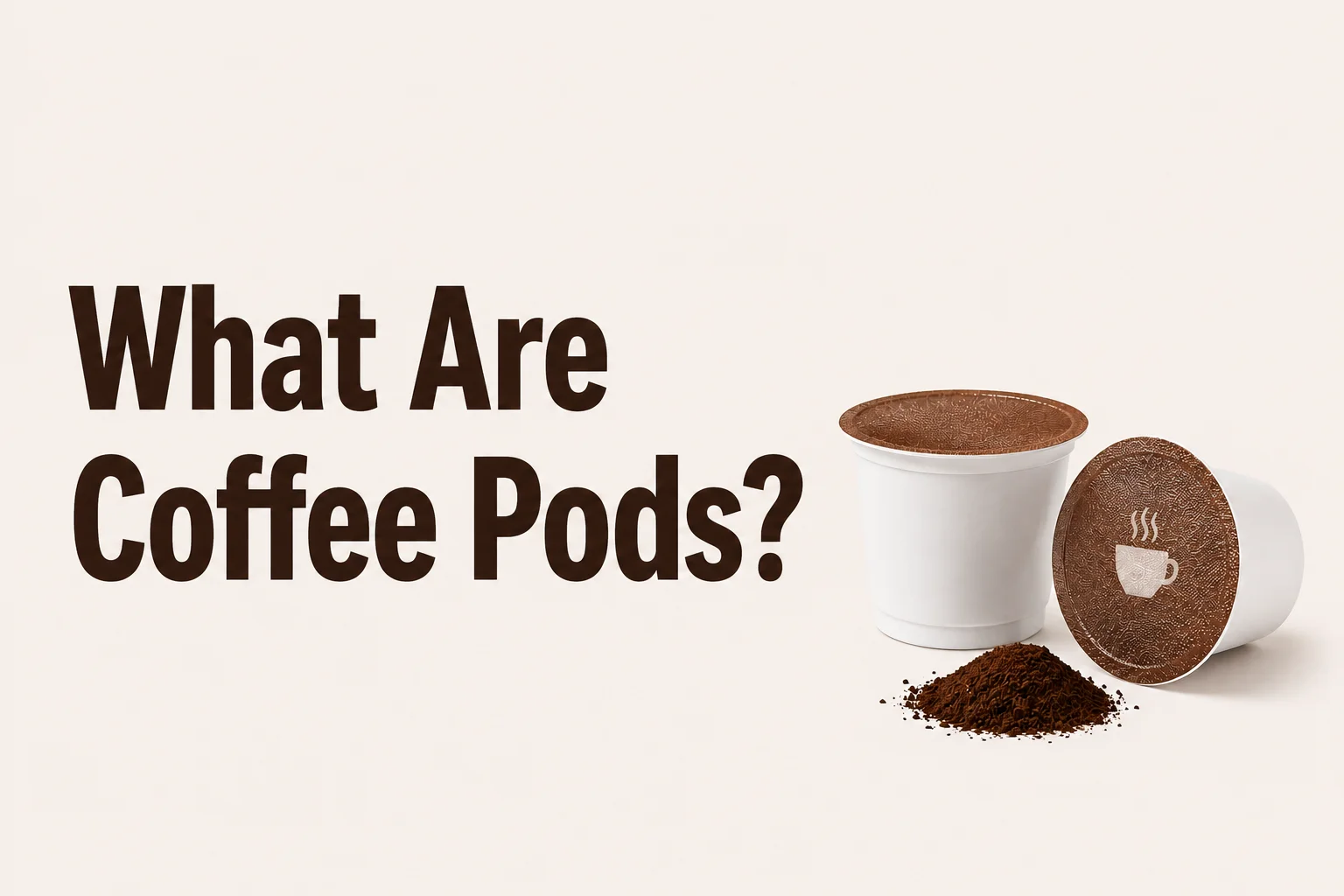
Coffee pods are small pre-portioned containers which are filled with ground coffee designed for single-serve brewing machines.
People usually use the term coffee pods to describe several formats, including :
- Soft coffee pods
- Coffee capsules
- K-Cups
- Nespresso capsules
Each pod contains a measured amount of coffee, helping users brew coffee quickly without grinding beans or measuring doses manually.
How Coffee Pods Work
Coffee pod machines are designed to brew coffee automatically using pressure and hot water.
Basic Brewing Process
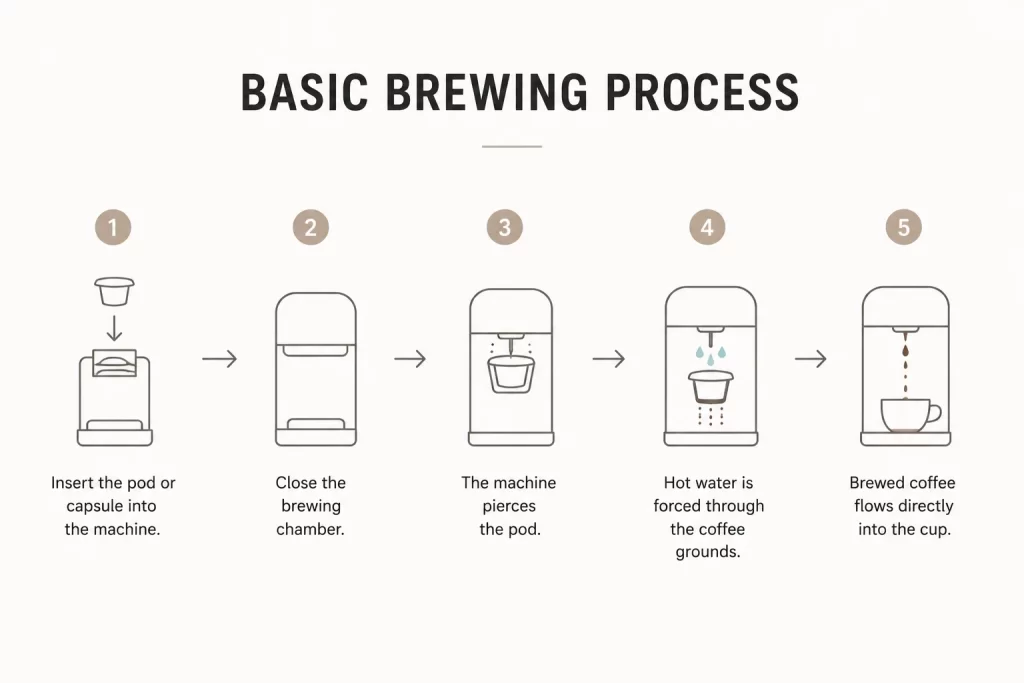
- Insert the pod or capsule into the machine.
- Close the brewing chamber.
- The machine pierces the pod.
- Hot water is forced through the coffee grounds.
- Brewed coffee flows directly into the cup.
Different systems use different pressure levels and brewing technologies, but the goal is the same, which is quick and consistent single-serve coffee.
Main Types of Coffee Pods
| Pod Type | Machine Compatibility | Typical Taste | Convenience | Waste Level | Price Position |
| K-Cups | Keurig machines | Mild to medium strength | Very easy | High | Budget to mid-range |
| Nespresso Original Capsules | Nespresso Original machines | Espresso-focused, richer flavor | Very easy | Medium | Premium |
| Nespresso Vertuo Capsules | Vertuo machines only | Thicker body, crema-heavy | Very easy | Medium to high | Premium |
| Reusable Coffee Pods | Depends on machine type | Depends on the coffee used | Moderate effort | Very low | Low long-term cost |
| Compostable Coffee Pods | Brand-specific compatibility | Similar to regular pods | Easy | Lower waste potential | Mid-range |
K-cups
K-Cups are the most widely used coffee pod systems, especially in North America. They are designed for Keurig machines. They are known for their speed, simplicity, and high flavour variety. Users can choose from hundreds of coffee options, including light, medium and dark roasts, flavoured coffee, decaf blends, tea, and even hot chocolate.
K-Cups are popular because they require almost no brewing knowledge for you to use them. Just insert the pod in, press a button, and the machine brews your coffee in under one minute. However, many standard K-Cups are designed more for convenience than premium speciality-coffee flavour.
Nespresso Original Capsules
Nespresso Original capsules are designed primarily for espresso-style coffee and use high-pressure extraction to produce concentrated shots with rich cream. These capsules are usually smaller than the K-Cups and focus more on the espresso intensity rather than just large mugs of drip-style coffee.
Many coffee drinkers prefer original capsules because they usually deliver stronger flavour, thicker texture and more cafe-style results. The system also supports milk-based drinks such as cappuccinos adn lattes when paired with a frother.
Nespresso Vertuo Capsules
Nespresso Vertuo capsules use barcode reading technology and centrifugal brewing instead of traditional espresso extraction. The machine scans the capsule barcode to automatically adjust water volume, brew time and spinning speed for each drink type.
Vertuo systems are designed to brew both the espresso shots and the larger cups of coffee with thick foam-like crema. They appeal to users who want to have more variety in cup sizes while still maintaining a premium and convenient brewing experience.
Reusable Coffee Pods
Reusable pods can be refilled with your own ground coffee, giving more brewing control while reducing single-use waste.
Compostable Coffee Pods
Compostable pods use biodegradable materials designed to reduce environmental impact, though disposal requirements vary by region.
Are Coffee Pods Bad for the Environment?
The environmental impact of coffee pods is widely talked about, and there is no single simple answer. Some critics point out that single-use coffee pod waste has become a major environmental concern due to the difficulty of recycling mixed-material capsules, while others argue that portion-controlled brewing may rescue wasted coffee, water and energy compared to the traditional brewing methods.
Much of the environmental impact depends on how the pods are made, used, and disposed of after brewing.
Factors That Affect Environmental Impact
Several things influence how sustainable a coffee pod system actually is:
- Pod material
- Recycling availability
- Manufacturing process
- Packaging waste
- Shipping and transport emissions
- Reusability
- Coffee waste reduction
For example, a recyclable aluminium capsule may still end up in a landfill if local recycling systems are not able to process it properly.
Key Environmental Concerns
One of the biggest concerns surrounding coffee pods is single-use waste. Many pods combine plastic, aluminium, filters, and organic coffee grounds into one small container, which makes recycling more difficult.
Common concerns include:
- Plastic waste buildup
- Complicated recycling processes
- Mixed-material construction
- Landfill accumulation
- Limited recycling access in some regions
Because pod systems are designed for convenience, many consumers simply throw used capsules away instead of sorting or recycling them correctly.
More Sustainable Alternatives
To address these concerns, many brands now provide you with lower-waste options and recycling programs.
Popular alternatives include:
- Compostable coffee pods
- Aluminum recycling programs
- Reusable stainless steel pods
- Paper-based pods
- Bulk coffee brewing systems
Reusable pods are especially popular among environmentally conscious coffee drinkers because they greatly reduce single-use waste over time.
A Balanced View
Coffee pods are not automatically “good” or “bad” for the environment. Their impact depends heavily on consumer habits, local recycling infrastructure, and the type of pod system being used.
For many users, choosing reusable or compostable options and disposing of pods properly can considerably reduce the environmental impact.
Compostable vs Recyclable vs Reusable Pods
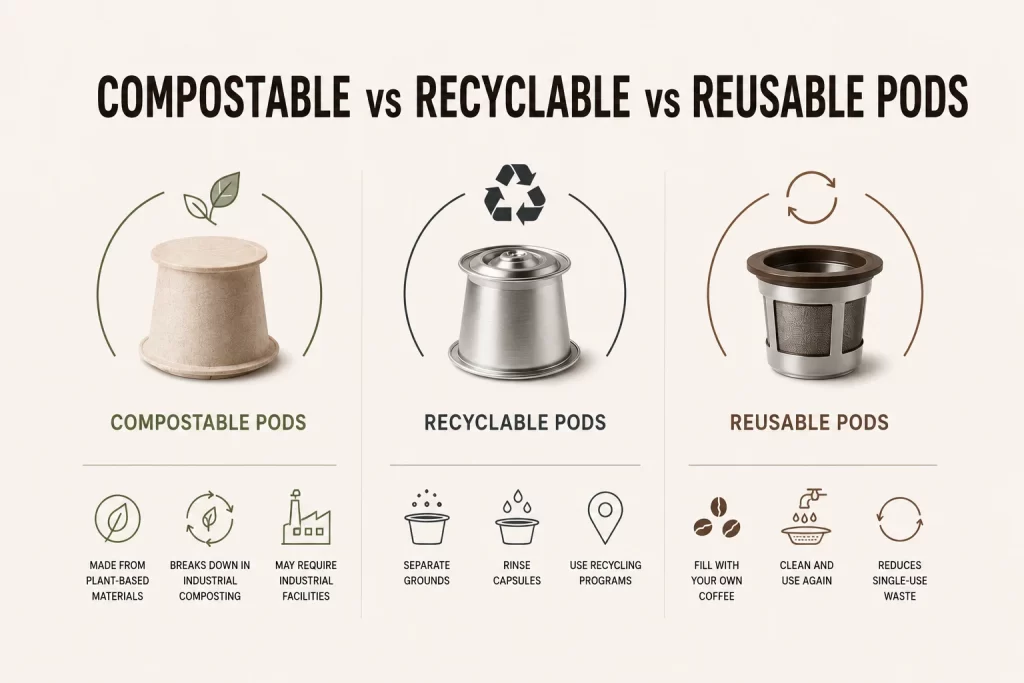
Not all eco-friendly coffee pods work the same way. Terms such as “compostable” and “recyclable” are usually misunderstood, so it is important to know the differences before buying.
Compostable Pods
Compostable pods are designed to break down naturally under composting conditions using biodegradable materials instead of conventional plastics.
These pods are usually made from:
- Plant fibers
- Bioplastics
- Paper-based materials
However, there are important limitations.
Some compostable pods:
- Require industrial composting facilities
- May not break down properly in home compost bins
- Need specific heat and moisture conditions
- Cannot always go into standard household waste systems
Because disposal rules vary by region, users should always check local composting guidelines before purchasing compostable pods.
Recyclable Pods
Recyclable pods are usually made from aluminium or recyclable plastic materials, which can theoretically be processed and reused.
Many premium pod brands now promote recycling programs to reduce landfill waste.
However, recyclable does not always mean convenient.
Some recycling systems require users to:
- Separate coffee grounds
- Rinse capsules
- Use mail-back recycling bags
- Drop capsules at collection points
In some areas, local recycling centres may reject small capsules entirely due to sorting limitations.
Reusable Pods
Reusable pods are refillable capsules designed for repeated use with compatible coffee machines.
They are usually made from:
- Stainless steel
- Durable BPA-free plastic
- Metal mesh filters
Reusable coffee pods reduce single-use waste because they can be filled and used multiple times instead of being thrown away after each brew. They also allow users to choose their own coffee beans and adjust the flavour strength more easily.
However, reusable pods require more manual filling and cleaning after brewing, which makes them less convenient than the disposable capsules.
Taste and Quality
Coffee pods prioritise convenience and consistency, but many coffee enthusiasts believe fresh-ground coffee still produces superior flavour. Grinding coffee fresh before brewing can significantly improve flavour clarity and aroma compared to pre-ground pod coffee. Read our guide on how to grind coffee beans properly.
Why Pod Coffee Tastes Different
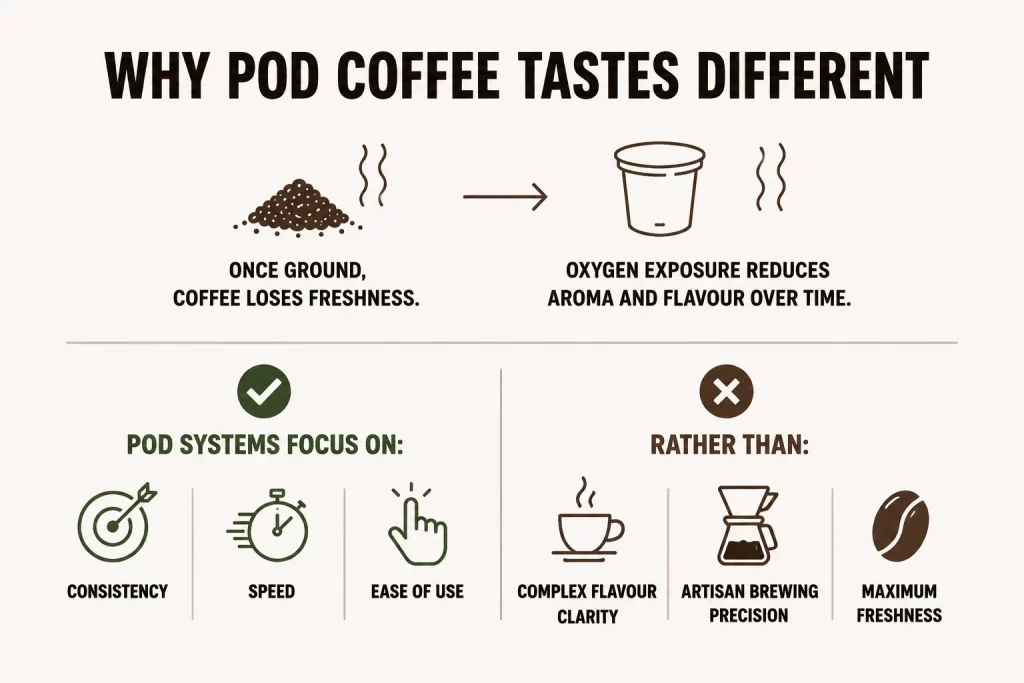
Pre-ground coffee gradually loses freshness over time, and oxygen exposure gradually reduces coffee aroma and flavour clarity after grinding, even inside sealed containers.
Pod systems focus on:
- Consistency
- Speed
- Ease of use
Rather than:
- Complex flavor clarity
- Artisan brewing precision
- Maximum freshness
Tips for Better-Tasting Pod Coffee
- Use filtered water
- Clean the machine regularly
- Choose higher-quality pod brands
- Store pods away from heat and moisture
- Select the correct cup size setting
Premium pod systems, especially espresso-focused machines, can still produce impressively good coffee for everyday use.
How to Choose the Right Coffee Pod
Choosing the right pod system depends on your priorities.
| Factor | What to Consider |
| Flavor Preference | Strong espresso vs mild drip coffee |
| Roast Level | Light, medium, or dark roast |
| Machine Compatibility | Pods only work with certain machines |
| Budget | Machines and pods vary greatly in cost |
| Sustainability | Compostable or reusable options |
| Caffeine Strength | Regular vs extra-strong blends |
Best Use Cases
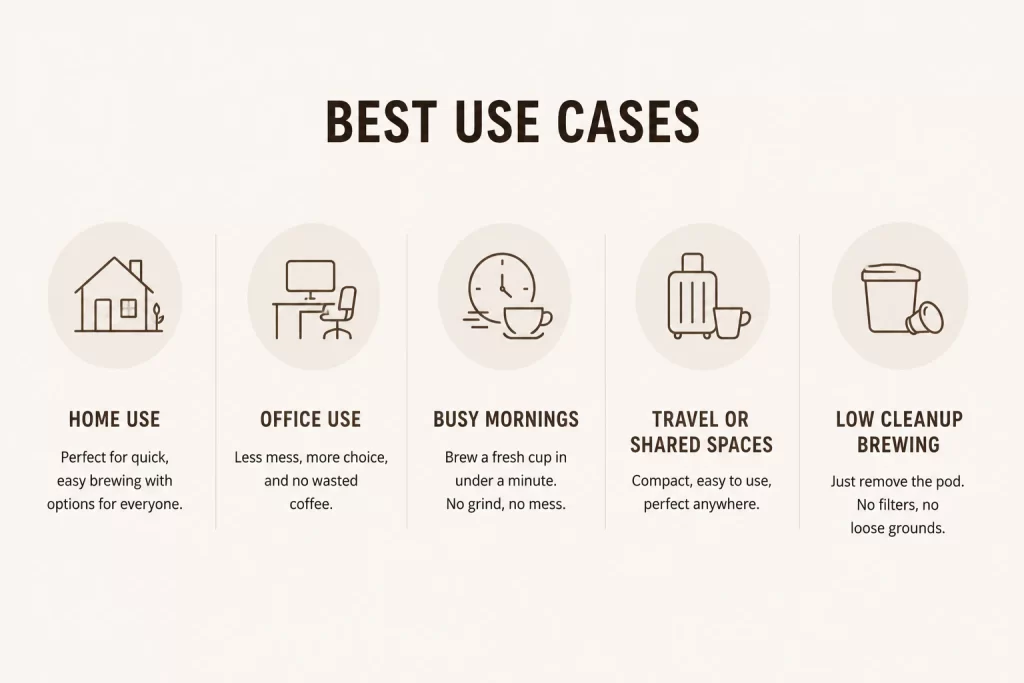
Home Use
Coffee pods are ideal for quick morning brewing with minimal effort. They are especially useful for households where people prefer different coffee styles or strengths.
Office Use
Single-serve systems reduce the amount of mess and allow employees to choose different flavours. They also help avoid wasting large pots of coffee throughout the workday.
Busy Mornings
Pods eliminate grinding, measuring, and cleanup. Most machines can brew a fresh cup in under a minute, which makes them convenient for tight schedules. Single-serve systems are also popular among people looking for faster brewing without sacrificing daily productivity. Learn more about how coffee increases productivity in the workplace.
Travel or Shared Spaces
Compact pod machines work well in hotels, dorms, and shared kitchens. Their simple operation which makes them practical for people who want coffee without a complicated setup.
Low Cleanup Brewing
Most systems only require removing the used pod after brewing. Unlike traditional coffee makers, there are usually no paper filters or loose grounds to clean up afterwards.
Common Problems and Fixes
Coffee Tastes Weak
Weak pod coffee is usually caused by brewing too much water through a single capsule or using lower-quality pods with lighter flavour intensity. Older pods can also lose freshness over time, making the coffee taste flat or watery.
Possible Causes
- Large cup setting
- Low-quality pods
- Old or stale capsules
Fixes
- Brew smaller cup sizes
- Use stronger or dark roast blends
- Buy fresher pods from reliable brands
Coffee Tastes Too Bitter
Bitter coffee usually happens when the machine over-extracts the coffee or when very dark roast pods are brewed at large volumes. Dirty machines with oil buildup can also negatively affect flavour.
Possible Causes
- Dark roast pods
- Over-extraction
- Dirty machine components
Fixes
- Clean the machine regularly
- Try medium roast capsules
- Reduce brew size for a stronger balance
Pod Machine Leaks
Leaks can happen if the pod is inserted incorrectly or if coffee residue blocks the brewing chamber. Over time, worn seals and mineral buildup may also cause water leakage around the machine.
Possible Causes
- Misaligned pod
- Damaged seal
- Blocked needles or chamber
Fixes
- Reinsert the pod carefully
- Clean the brewing chamber thoroughly
- Descale the machine regularly
The machine does not recognise the pod
Some machines use scanners or specific capsule designs to verify compatibility. If the pod is damaged or unsupported, the machine may fail to detect it properly.
Possible Causes
- Wrong capsule type
- Barcode scanning issues
- Compatibility problems
Fixes
- Check machine compatibility carefully
- Use approved pod brands
- Clean the scanner or capsule area if applicable
Weak Crema or Thin Body
Thin coffee texture or weak crema is common when capsules are old or when the brew setting uses too much water. Espresso-style systems usually perform best with smaller serving sizes.
Possible Causes
- Low brewing pressure
- Old capsules
- Incorrect cup size setting
Fixes
- Use fresh espresso capsules
- Brew smaller servings
- Maintain and clean the machine regularly
FAQs
- How long do coffee pods stay fresh?
Most sealed coffee pods stay fresh for several months because they are packed in airtight containers. However, flavour quality gradually declines over time, especially after the expiration date.
- Can coffee pods make iced coffee?
Yes. Many pod machines can brew strong coffee that works well over ice. Using espresso-style capsules or smaller brew sizes usually produces better iced coffee flavour.
- Do coffee pod machines need regular maintenance?
Yes. Regular cleaning and descaling help maintain brewing temperature, water flow, and coffee flavour. Most manufacturers recommend descaling every few months, depending on usage.
- Are coffee pod machines expensive to run?
The machine itself may be affordable, but pod costs can add up over time. Frequent coffee drinkers often spend more on pods compared to buying ground coffee or whole beans in large quantities.
Conclusion
Coffee pods have become popular because they make brewing coffee fast, simple, and consistent. From K-Cups to reusable capsules, each pod system provides you with different advantages depending on your taste preferences, budget, and sustainability goals.
For most people, the best choice comes down to balancing convenience, flavour, and environmental impact. Choosing the right machine and pod type can help you enjoy better coffee with less effort every day.